Topic Hub
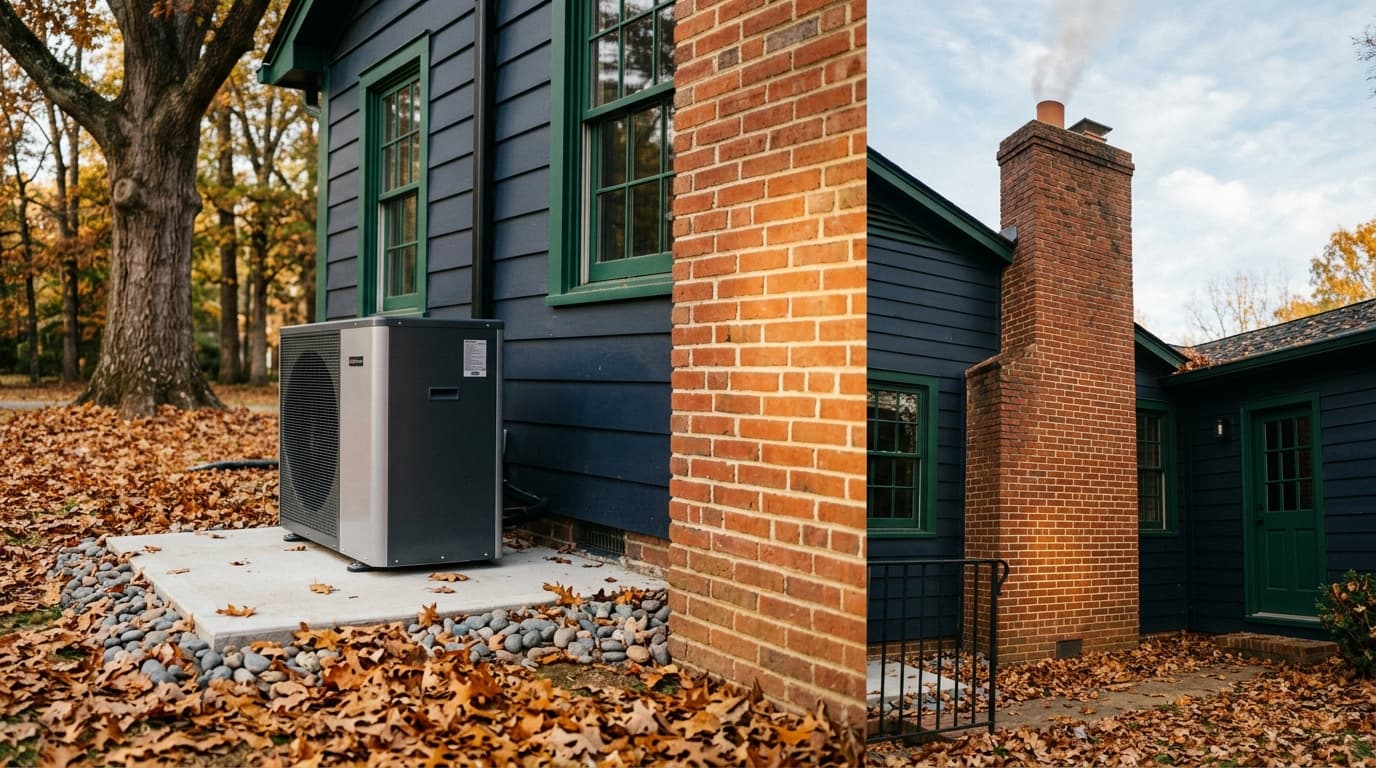
Heat Pump vs Furnace — The Birmingham, AL Decision
Climate math, cost math, sizing, dual-fuel, refrigerant transition, and equipment selection — every Lockwell guide for the heat-pump-or-furnace decision in North Birmingham.
01 · What this covers
Why we built this hub.
Heat pump or furnace is the most expensive HVAC decision a North Birmingham homeowner makes — typically $8,000 to $14,000 of equipment plus 15 years of utility bills. We get this question on the truck every week.
This hub gathers every Lockwell guide that touches the decision — climate math, cost math, sizing, dual-fuel design, the R-454B refrigerant transition, and SEER2 efficiency tiers. Use the components grid to jump to the specific question you have.
If you want a written quote that lays out a heat-pump scenario, a furnace scenario, and a dual-fuel scenario side-by-side, that is what our installation process is built around. Manual J load first, equipment selection second.
02 · The Birmingham angle
Why Alabama makes this different.
Birmingham sits in IECC climate zone 3A — mild winters, long cooling season, persistent humidity. That climate profile is the entire reason heat pumps work here as a primary heat source. In Buffalo or Minneapolis the math flips because the balance point is exceeded too often.
Our heating season averages around 2,800 heating-degree days, with maybe 40 hours per year below 25 degrees. A modern variable-speed heat pump operates at 200 to 300 percent efficiency (COP 2 to 3) for the vast majority of those hours. The deep cold snaps that crater heat-pump performance simply do not happen often enough here to flip the math against the heat pump.
Older homes in Hueytown, Bessemer, and parts of Pleasant Grove sometimes have undersized service panels (100A or even 60A) that cannot handle full electric backup heat. That changes the equation — those homes often want dual-fuel with an existing gas furnace as the backup stage.
03 · The components
Every guide on heat pumps, furnaces, and the choice between them.
Twelve resources — comparison guides, sizing guides, refrigerant transition, SEER analysis, and the service pages that handle install and repair. Read in any order.
Blog · Comparison
Heat Pump vs Furnace in Alabama — Which Wins?
Climate math, operating cost per BTU, and the Alabama winter profile that flips the answer compared to northern states.
Blog · Sizing
Heat Pump Sizing for Gardendale & North Birmingham
Manual J load, balance point, supplemental heat strips. Why oversizing kills humidity control even on a heat pump.
Blog · Variable Speed
Variable-Speed vs Single-Stage in Alabama
How modulating heat pumps and two-stage furnaces handle Alabama shoulder seasons better than single-stage equipment.
Blog · Refrigerant
R-410A to R-454B Refrigerant Transition
New heat pumps shipping in 2025 and beyond use R-454B. What the AIM Act phase-down means for your replacement quote.
Blog · SEER
SEER Ratings Explained for Birmingham
SEER2 tiers, payback math, and where the cost-efficiency curve actually pays off in our long cooling season.
Blog · Mini-Split
Ductless Mini-Split for Older Alabama Homes
When a heat pump alternative makes more sense — additions, garages, sunrooms, and pre-1960 homes without ductwork.
Blog · Replacement
How Long Do HVAC Systems Last?
Service life numbers for furnaces vs heat pumps. Use this to time your replacement before the system forces your hand.
Service · Heat Pump
Heat Pump Service
Repair, install, and seasonal service for air-source heat pumps across the Birmingham metro.
Service · Heating
Heating Repair
Gas furnace and heat-pump repair. Diagnostics, ignition, blower, defrost, and aux heat.
Service · Installation
HVAC Installation
Manual J load calc, AHRI matched systems, dual-fuel design. Written estimate before the install scope is signed.
Service · Mini-Split
Ductless Mini-Split Installation
When a ducted heat pump or furnace is not the right answer, mini-split is the alternative we install most often.
Service Area
Gardendale, AL HVAC
North Birmingham winters run a few degrees colder than downtown — affects heat-pump balance-point math.
04 · Common questions
What homeowners ask us first.
Is a heat pump better than a gas furnace in Birmingham, Alabama?+
For most North Birmingham homes, a modern variable-speed heat pump is more efficient over a year than a gas furnace. Our winters are mild enough that the heat pump runs in heat-pump mode 90 percent of the heating season, with auxiliary electric or gas heat picking up only during single-digit cold snaps. Combined with a long cooling season, total annual operating cost typically favors the heat pump.
When does a gas furnace make more sense than a heat pump?+
Three scenarios. (1) An existing high-efficiency gas furnace less than 10 years old — replacing a working 95% AFUE furnace with a heat pump rarely pencils out. (2) Homes on natural gas where the gas line is already installed and the rate is favorable. (3) Homeowners who want backup heat that does not depend on the grid; gas keeps running through power outages with a battery thermostat backup.
What is dual-fuel and is it worth it?+
Dual-fuel pairs an air-source heat pump with a gas furnace as the auxiliary stage. The heat pump handles heating above the balance point (typically 35 degrees in Birmingham), and the furnace takes over for the deep cold snaps. For homes with existing gas service that are replacing both systems at once, dual-fuel often delivers the lowest total operating cost in the Birmingham climate.
How is heat pump sizing different from furnace sizing?+
A gas furnace is sized to the heating load alone — ours rarely run above 80,000 BTU in this climate. A heat pump is sized to the cooling load (because that is the longer season here) and then verified against the heating load with auxiliary heat strips covering the gap. Oversizing a heat pump kills humidity control just like oversizing a straight AC. Manual J load calculation is the only honest way to size either system.
How long do heat pumps last compared to furnaces?+
Modern air-source heat pumps deliver 12 to 15 years of service life with proper maintenance — slightly less than a gas furnace at 18 to 22 years, because the heat pump runs 12 months a year instead of 4. The math favors the heat pump on operating cost during those years, but plan for a slightly shorter replacement cycle.
What changed with R-410A and R-454B?+
EPA AIM Act phase-down rules require new residential heat pumps and ACs manufactured after January 1, 2025 to use lower-GWP refrigerants like R-454B and R-32. R-410A is being phased down on a multi-year schedule. If you are replacing a system in 2026 or later, you will receive an R-454B unit. Repair on existing R-410A systems remains legal — there is no "ban" on the existing equipment.
Will my electric bill go up with a heat pump?+
Compared to electric resistance heat (baseboard, electric furnace, heat strips alone), a heat pump cuts heating-season electric use by roughly 50 percent. Compared to a gas furnace, the heat pump uses electricity instead of gas, so the question becomes which utility rate is more favorable in your area. Run the math on your last 12 months of bills before you decide.
05 · Next step
Ready to compare scenarios for your home?
We will run a Manual J load calc on your home, lay out a heat-pump quote, a furnace quote, and a dual-fuel quote side-by-side, and walk you through the operating-cost math. Written estimate, no sales pressure.
Call (205) 206-7030