Jefferson County • 35205
HVAC Service in Highland Park, Alabama
HVAC Service in Birmingham's Highland Park Historic District
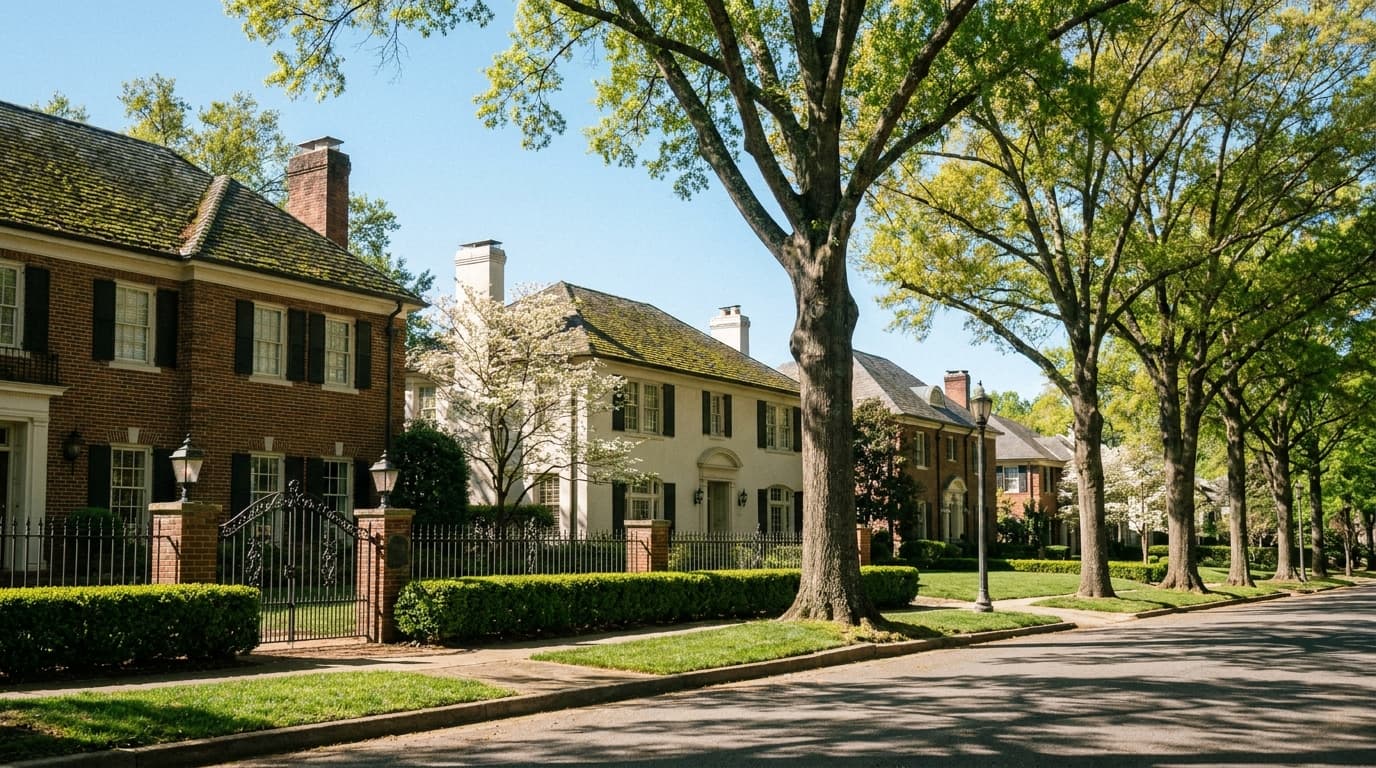
Highland Park is one of Birmingham's oldest intact neighborhoods — 1910s to 1940s Craftsman bungalows, Tudor revivals, and four-square homes that predate central air by decades. Lockwell HVAC understands pre-duct housing. We retrofit mini-splits cleanly, service aging ductwork carefully, and never treat a historic home like a new-construction job site.
Ready for HVAC service in Highland Park?
Available 24/7. Licensed and insured. Written estimates.
About Highland Park
Highland Park sits on the ridge east of downtown Birmingham between Clairmont Avenue and Montclair Road, a designated historic district with some of the city's finest intact early-twentieth-century residential architecture. The neighborhood developed between roughly 1905 and 1945, meaning the housing stock predates central air conditioning by 20 to 40 years in most cases. That single fact shapes every HVAC conversation we have in Highland Park. Homes here were built for natural ventilation — high ceilings, operable transoms, deep covered porches, and cross-ventilation layouts that moved summer air through the house before mechanical cooling existed. When central air arrived in the 1960s and 1970s, contractors retrofitted ductwork through whatever space they could find: shallow attics, unused closets, wall cavities, and crawl spaces. The results ranged from functional to problematic, and much of that original retrofit ductwork is now 50 to 60 years old. The dominant housing types in Highland Park are Craftsman bungalows (800 to 1,800 sq ft, one and one-and-a-half stories), four-square homes (1,400 to 2,200 sq ft, two full stories), and the occasional Tudor revival or Colonial revival on the larger lots near the Highland Park Golf Course. A few multi-family conversions and small apartment buildings fill gaps in the street grid. Each type presents different retrofit challenges, but all share the common thread of pre-duct construction. Highland Park's urban character creates HVAC conditions that suburban contractors often underestimate. The urban heat island effect raises local temperatures 2 to 4 degrees above surrounding suburban areas — meaning an August day that registers 95°F in Gardendale is 98 to 99°F in Highland Park. Mature street trees provide partial shade but also deposit organic debris on outdoor equipment. Alley-facing equipment pads on the smaller lots are sometimes shaded from the west but exposed to service-vehicle traffic that creates vibration issues over time. Renovation activity in Highland Park has been substantial since 2010. Many homes have undergone interior renovations that tightened the building envelope — new windows, added insulation, air sealing — without upgrading the HVAC system to match. A 2-ton system that was appropriately sized for a leaky 1940 envelope may now be oversized for a renovated 2020 envelope that loses much less energy. Oversized systems in tight renovated homes short-cycle, fail to dehumidify, and create indoor air quality problems that homeowners often attribute to other causes.
| Era | Style & Size | Common HVAC Issues |
|---|---|---|
| 1905–1929 (early development) | Craftsman bungalows, four-squares, 800–2,000 sq ft | No original ductwork, high ceilings, ductless mini-split retrofits, electrical panel upgrades |
| 1930–1945 (Depression/WWII era) | Colonial revival, Tudor revival, brick bungalow, 1,200–2,400 sq ft | Retrofit central air over improvised ductwork, low attic clearance, 100-amp panel limits |
| Post-2010 renovations | Renovated homes of any era with tightened envelopes | Oversized existing systems short-cycling, inadequate fresh-air ventilation, dehumidification deficits |
HVAC Services Available in Highland Park
Field Notes from Highland Park
Ductless mini-split retrofit, Craftsman bungalow on 12th Avenue South
“1923 bungalow with no existing ductwork — original window units still in place. Installed a two-head ductless system: one 9,000 BTU head in the living/dining area, one 9,000 BTU head in the bedroom wing. Line set routed through a single exterior wall chase. No plaster disturbed. Both heads on one outdoor unit. Homeowner removed four window units after commissioning.”
— Service note, Highland Park
Duct inspection and sealing, four-square home near Highland Park Golf Course
“1930s four-square with 1970s-era retrofit ductwork in the attic. Pressure test showed duct leakage at 28% of system airflow — most from disconnected boot collars where attic framing had shifted. Sealed 14 boot connections with mastic, re-strapped three sagging flex runs, re-insulated exposed hard-duct at the plenum. Leakage dropped to 9% on retest. Homeowner reported noticeably better airflow in the second-floor bedrooms.”
— Service note, Highland Park
Oversized system diagnosis, renovated Tudor revival
“1938 Tudor with a major 2019 renovation — new windows, spray foam in the attic, house wrap on exterior walls. Original 3-ton system still in place. System short-cycling every 8 minutes. Manual J load calc confirmed the renovated envelope needed 1.5 tons. Rather than full replacement, installed a variable-speed air handler that can modulate down to 40% capacity. Short-cycling stopped. Indoor RH dropped from 58% to 49%.”
— Service note, Highland Park
Furnace safety inspection, bungalow on Clairmont Avenue
“Older gas furnace, homeowner smelled something during the first cold snap. Combustion analysis showed CO at 85 ppm in the supply register — above any acceptable threshold. Borescope confirmed a crack in the primary heat exchanger at the burner-cell weld. Tagged the furnace, documented findings in writing, presented replacement options. Homeowner selected a 96% AFUE condensing furnace with PVC venting through the rim joist.”
— Service note, Highland Park
Highland Park Neighborhoods We Serve
Clairmont Avenue Corridor
The spine of Highland Park running east-west through the historic district. Dense Craftsman bungalow stock, 1910s to 1930s.
Highland Park Golf Course Area
Larger lots along the perimeter of Highland Park Golf Course, home to the neighborhood's biggest four-square and Colonial revival houses.
South Highland
The southern section of the district bordering Crestwood, with a mix of Tudor revivals and Colonial ranches built in the 1930s to 1940s.
HVAC Questions from Highland Park Homeowners
Nearby Service Areas
Ready for reliable HVAC service in Highland Park?
Call 24/7 for dispatch. Written estimates before work begins.
Call (205) 206-7030