Furnace Repair Homeowners Recommend Across North Metro Birmingham
Gas Furnace Safety Comes First
Heating repair in Birmingham means dealing with gas furnaces, heat pumps, and the occasional aging relic that has no business still running. Gas furnaces heat most older homes across Gardendale, Bessemer, and the established neighborhoods of North Birmingham. Reliable workhorses — but they run on combustion, and combustion demands respect.
The heat exchanger is the critical safety component. It separates the combustion gases from the air that circulates through your home. A cracked heat exchanger can leak carbon monoxide — an odorless, colorless gas that kills over 150 people annually in the United States according to the Consumer Product Safety Commission.
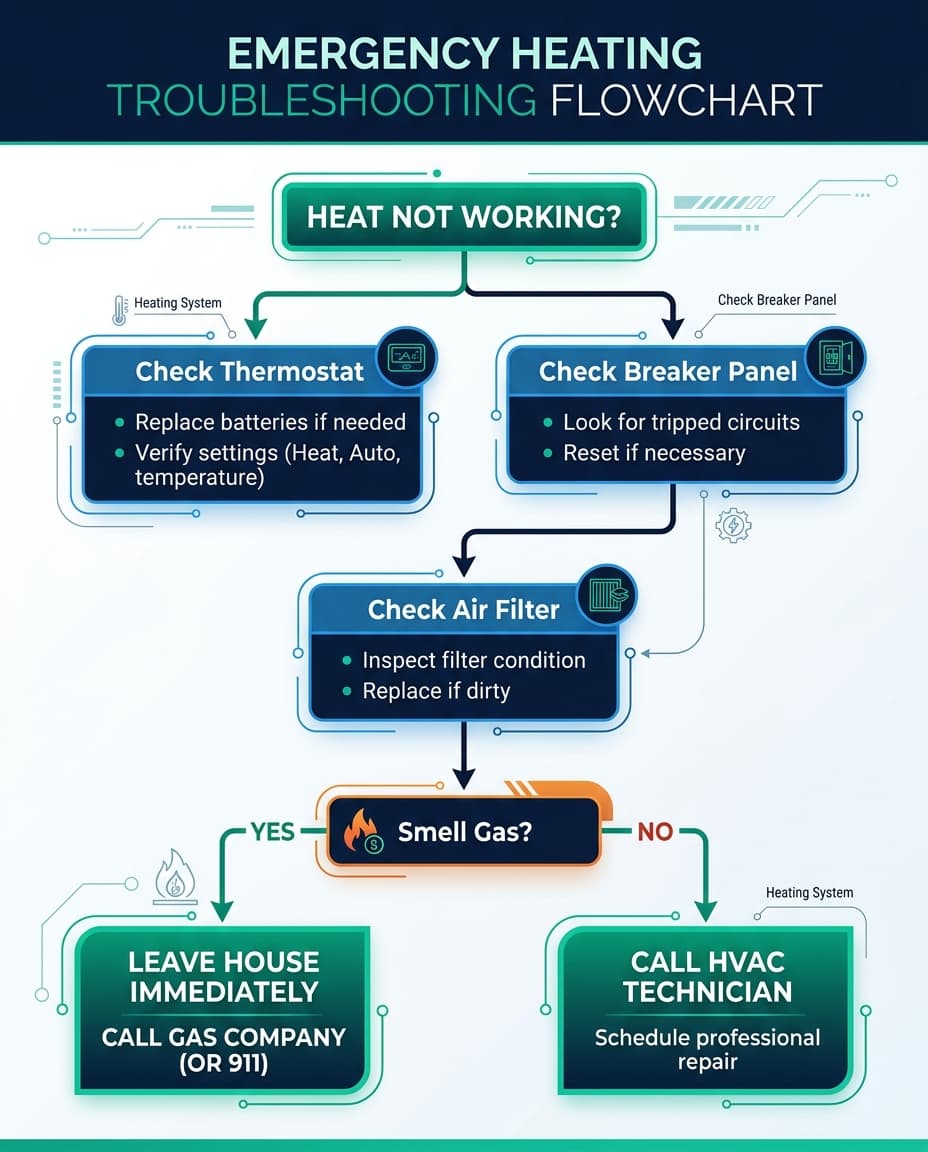
If your CO detector alarms, get everyone out. Do not investigate. Do not open windows and wait. Get out and call 911 from outside. Carbon monoxide exposure is cumulative and symptoms mimic the flu — headaches, dizziness, nausea — which makes it easy to dismiss until it becomes dangerous.
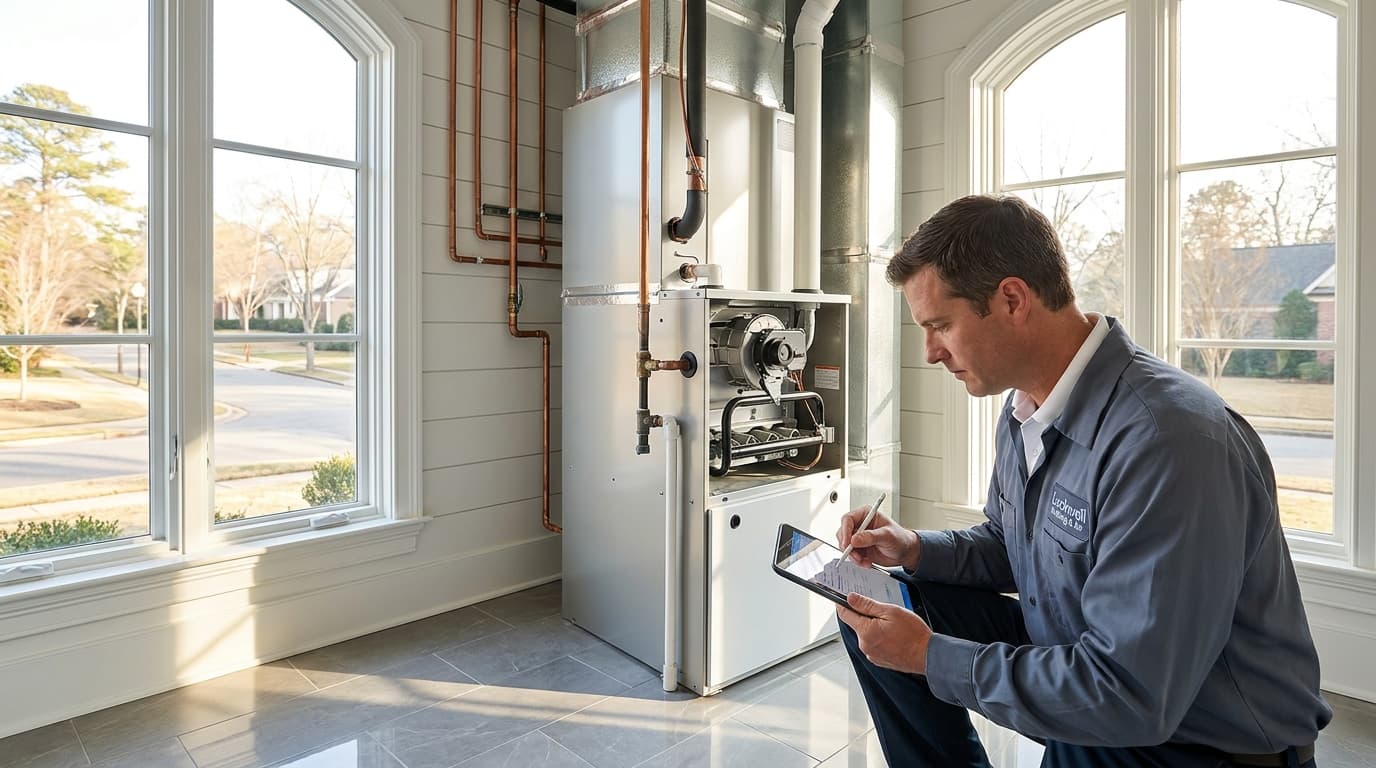
Heat exchanger inspections are a standard part of every fall maintenance visit. Our technicians use cameras and mirrors to examine the exchanger surfaces for cracks, corrosion, and stress fractures that develop over years of thermal cycling. Catching a crack early means a controlled repair or replacement decision. Missing one means a potential safety emergency.
| Component | Complexity | Key Variables |
|---|---|---|
| Thermocouple / flame sensor | Low | Part compatibility, accessibility |
| Hot surface igniter | Low–Medium | Fragility of ceramic element, brand availability |
| Control board replacement | Medium | OEM vs. aftermarket, programming required |
| Heat exchanger replacement | High | System age, whether full furnace replacement is more practical |
| Reversing valve (heat pump) | High | Requires brazing, refrigerant handling, and precise electrical work |
| Source: Angi — Furnace Repair Cost Guide | ||
Quick Reference Guide
Pilot Lights and Ignition Systems
Older gas furnaces use standing pilot lights. Modern furnaces use electronic ignition — either hot surface igniters or spark ignition systems. Both can fail, but they fail differently.
A standing pilot that keeps going out usually has a thermocouple problem. The thermocouple is a safety sensor that detects whether the pilot flame is lit. When it weakens, it sends a false signal that shuts off the gas valve. Thermocouple replacement is straightforward and inexpensive.
Hot surface igniters are more common in furnaces built after the mid-1990s. They glow orange-hot to ignite the gas. These igniters are fragile — ceramic elements that crack from age, vibration, or oil contamination from handling. A cracked igniter means no heat. Our trucks carry igniters for every major furnace brand because this is one of the most common winter service calls across Gardendale and Fultondale.
If your furnace clicks repeatedly but never fires, the igniter is the likely suspect. If it fires briefly then shuts down, the flame sensor may be dirty or failing. A simple cleaning with fine abrasive cloth often restores flame sensor function — a repair that takes minutes but prevents the frustration of intermittent heating failure.
Heat Pump Issues in Alabama Winters
Heat pumps serve dual duty — cooling in summer, heating in winter. Alabama's mild winters make heat pumps an efficient choice for most homes in our service area. But when temperatures drop below 30 degrees, heat pumps work harder and their weak points show up.
The defrost cycle is the most common source of winter heat pump complaints. When the outdoor coil ices up in cold weather, the system reverses operation briefly to melt the ice. During defrost, you feel cool air from the vents for 5 to 15 minutes. This is normal. Homeowners across Center Point, Irondale, and Helena call us every winter thinking something is wrong when the system is actually doing exactly what it should.
When the defrost cycle actually fails — a bad defrost control board, a stuck reversing valve, or a faulty temperature sensor — the outdoor unit ices up and stays iced. The system switches to emergency heat strips, which keep your house warm but cost significantly more to operate. If your electric bill suddenly spikes during winter, check your outdoor unit for ice buildup.
Reversing valve problems are the other common heat pump winter issue. The reversing valve switches the system between heating and cooling modes. When it sticks or fails, the system either cannot heat, cannot cool, or gets stuck between modes and does neither well. Reversing valve repair or replacement requires a licensed technician — it involves brazing, refrigerant handling, and precise electrical work.
Heat Exchanger Diagnosis
A cracked heat exchanger does not always announce itself dramatically. Sometimes the only sign is a faint, unusual odor when the furnace runs. Sometimes it is yellow or flickering burner flames instead of steady blue ones. Sometimes it is soot accumulation around the burner area.
Our technicians inspect heat exchangers using a combination of visual examination, combustion analysis, and where accessible, camera inspection of interior surfaces. We test for carbon monoxide in the supply air stream — any measurable CO in the supply air indicates a potential breach in the heat exchanger.
If we find a cracked heat exchanger, we shut the furnace down immediately and recommend replacement of the heat exchanger or the entire furnace, depending on the age and condition of the equipment. There is no safe way to patch or seal a cracked heat exchanger. This is a safety-critical component with zero margin for compromise.
When Heating Repair Becomes Heating Replacement
Furnaces typically last 15 to 25 years depending on maintenance history and usage patterns. Heat pumps average 12 to 15 years. When repair costs on an aging system start accumulating, the question shifts from repair to replacement.
We help you make that decision with actual numbers. What will the repair cost? What is the expected remaining life of the system? What would a new system cost, and how much would you save in monthly energy costs? We calculate the breakeven point so you can see exactly when replacement pays for itself.
For homes in Gardendale, Bessemer, and across North Birmingham, replacing an old single-stage furnace or 10-SEER heat pump with modern equipment typically reduces heating costs by 30 to 40 percent. That efficiency gain, combined with improved reliability and a fresh manufacturer warranty, makes replacement the smart financial move for many households.
Call Lockwell for Heating Service
Available 24/7 for heating emergencies. Licensed and insured. Written estimates before any work begins. Call (205) 206-7030 for heating repair service in Gardendale, Fultondale, Center Point, Irondale, Bessemer, Hueytown, Pleasant Grove, and Helena.
Heating Repair — Frequently Asked Questions
Prepared by the field technicians at Lockwell HVAC in Gardendale, Alabama. This page reflects how we actually diagnose, repair, and install equipment on residential service calls across the North Birmingham metro — what we measure, what we replace, and how we verify the work before we leave.
Heating Repair Service Area
Lockwell HVAC provides heating repair for homes in 9 North Birmingham metro communities. We do not service Hoover, Vestavia Hills, Mountain Brook, Trussville, or cities outside Jefferson and Shelby counties.
- [1]Over 150 deaths annually from CO produced by fuel-burning appliances — U.S. Consumer Product Safety Commission (CPSC)
- [2]Carbon monoxide safety guidelines — Centers for Disease Control and Prevention (CDC)
- [3]Heat exchanger inspection standards — Air Conditioning Contractors of America (ACCA)
Bookmark this page for reference. Share it with a neighbor who might find it useful. If you have questions about anything covered here, call us directly — a real person answers, not a recording.