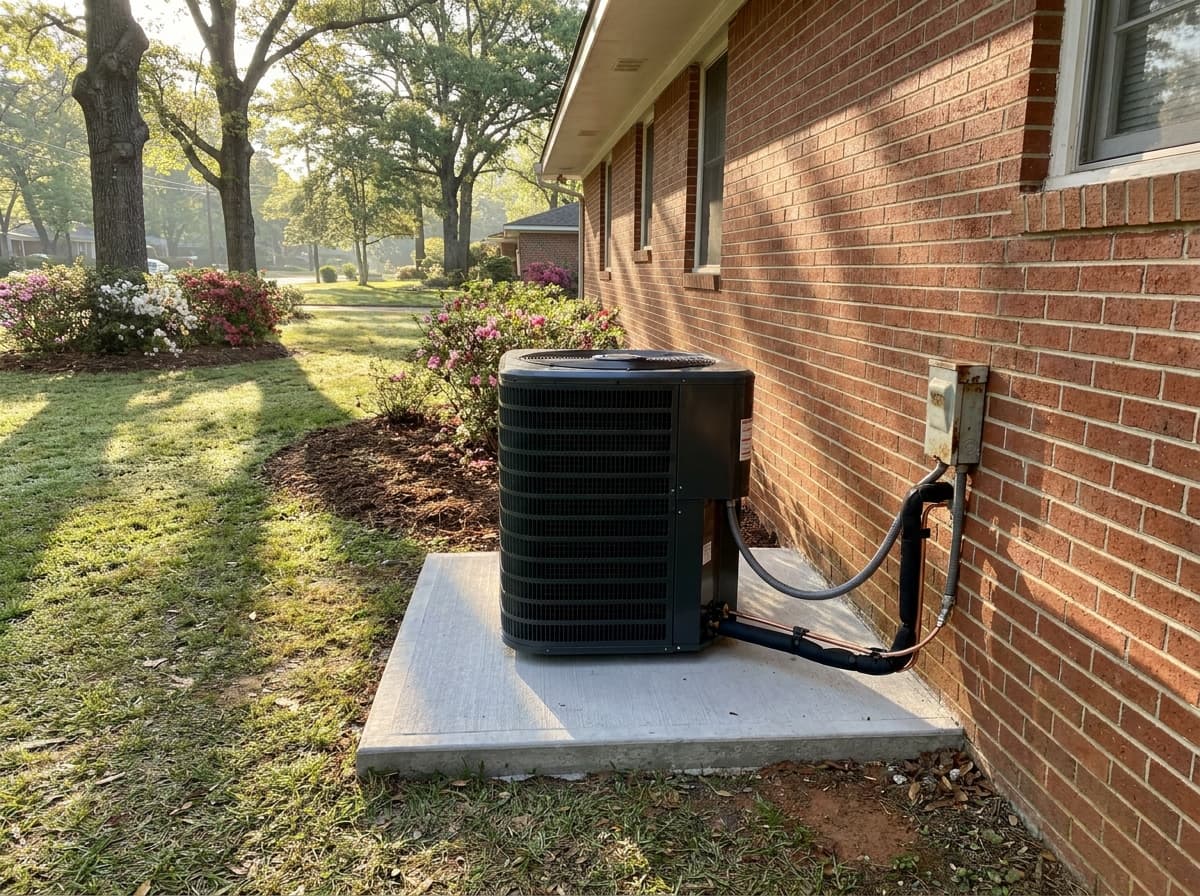
New HVAC Systems Sized Right for Gardendale & Warrior Homes
Why Installation Quality Matters More Than Equipment Brand
HVAC installation is where most homeowners get burned — not by the equipment, but by who installs it. Here is something most companies will not tell you: the brand on the box matters less than who puts it in. A top-tier system installed wrong performs worse than a mid-range system installed right. Every time.
ENERGY STAR research puts it bluntly — improper installation can reduce system efficiency by up to 30 percent. That means you could buy the most expensive system on the market and lose almost a third of its performance to bad installation work. You are paying premium equipment prices for mid-grade results.
We see this across Gardendale, Irondale, Bessemer, and every community we serve. Homeowners get talked into expensive equipment, the installer rushes through the job, and six months later the house has hot spots, high electric bills, and humidity problems that the old system never had. The equipment is fine. The installation is the problem.
| Factor | Impact on Cost | Notes |
|---|---|---|
| System size (tonnage) | High | Determined by Manual J, not square footage guesses |
| SEER2 efficiency rating | Medium | Higher efficiency = higher upfront, lower monthly bills |
| Ductwork condition | Variable | Sealing or replacement adds cost but protects investment |
| Refrigerant line run length | Low–Medium | Longer runs require more material and labor |
| Electrical panel upgrades | Variable | Required if panel cannot support new equipment amperage |
| Source: ENERGY STAR — HVAC Installation Guidance | ||
Quick Reference Guide
Load Calculations Are Not Optional
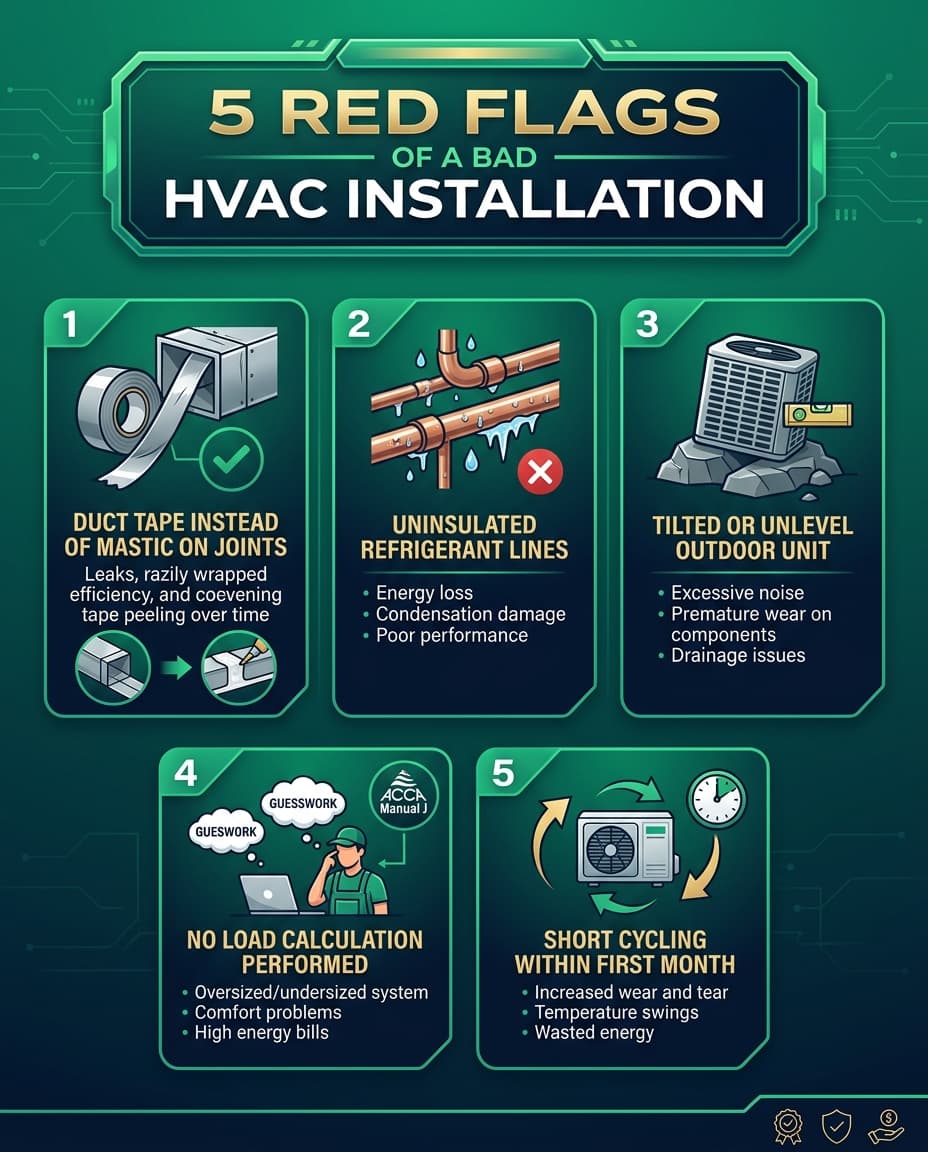
Every Lockwell HVAC installation starts with a Manual J load calculation. This is the engineering analysis that determines exactly how much heating and cooling capacity your specific home needs. It accounts for square footage, insulation levels, window types and orientation, ceiling height, number of occupants, ductwork condition, and the specific microclimate of your property.
Many installers skip this step. They look at the square footage, apply a rule of thumb, and pick a system size. That rule of thumb was wrong 30 years ago and it is still wrong today. Every home is different. A 2,000-square-foot home with new windows, good insulation, and a shaded lot needs significantly less capacity than a 2,000-square-foot home with original 1970s windows, minimal insulation, and a south-facing exposure.
Oversizing is the most common mistake we correct. An oversized system costs more to purchase, costs more to install, costs more to operate, and delivers worse comfort than a properly sized one. It short-cycles — turning on and off rapidly — which wastes energy, increases wear on components, and leaves your home humid because the system never runs long enough to pull moisture from the air.
Ductwork Makes or Breaks the Installation
The best equipment in the world cannot overcome bad ductwork. If your ducts leak, are undersized, or are poorly routed, the new system will fight against those restrictions from day one.
Before every installation, we assess the existing ductwork with static pressure measurements and visual inspection. We identify leaks, restrictions, and design problems that would undermine the new equipment. Sometimes the ductwork is fine and just needs sealing at a few joints. Sometimes sections need replacement. Sometimes the entire duct system needs redesigning to match the airflow requirements of the new equipment.
This assessment is not an upsell — it is engineering. A system designed for 400 CFM per ton cannot deliver its rated capacity through ducts that only flow 300 CFM per ton. Ignoring ductwork limitations is like putting a race engine in a car with a clogged exhaust pipe.
Homes across Center Point, Bessemer, and the older neighborhoods of Gardendale frequently have original 1960s or 1970s ductwork that was designed for the much less demanding systems of that era. Modern high-efficiency equipment moves more air at different pressures, and vintage ductwork often cannot keep up.
Refrigerant Line Installation Matters
The copper refrigerant lines connecting your indoor and outdoor units must be properly sized, properly insulated, properly supported, and properly charged. Shortcuts here cause problems that may not appear for months but ultimately reduce system life and efficiency.
Every line set gets pressure tested with nitrogen before we charge the system with refrigerant. This test verifies that every joint, every connection, and every fitting is leak-free. We verify the refrigerant charge by measuring superheat and subcooling — the engineering parameters that confirm the system is operating at design conditions.
Both the suction line and liquid line get closed-cell foam insulation for the entire run. No exposed copper. In Alabama humidity, uninsulated lines drip condensation that damages surrounding materials and indicates energy waste.
Electrical Work and Safety
Every installation includes a full electrical assessment. We verify that your panel has adequate capacity for the new equipment, that the disconnect is properly sized and located, and that all wiring meets current National Electrical Code requirements.
Modern high-efficiency systems often draw different electrical loads than the equipment they replace. A panel that handled your old 10-SEER system may need a breaker upgrade or even a panel upgrade to safely support a new 18-SEER variable-speed unit.
We coordinate with licensed electricians when panel work is needed. This adds time but eliminates the safety risk of overloaded circuits and the inconvenience of tripped breakers during peak operation.
Warranty Registration Handled For You
Every installation includes full manufacturer warranty registration, which we handle for you. We document the installation with photographs and measurements that serve as your warranty proof for the life of the equipment. Manufacturer warranties require professional installation by a licensed contractor — our Alabama contractor license and manufacturer certifications satisfy every warranty requirement.
Schedule a Consultation
Call (205) 206-7030 to schedule a installation quote. We assess your home, perform the load calculation, evaluate your ductwork, and present options with transparent pricing. Written estimates before any commitment. Licensed and insured.
HVAC Installation — Frequently Asked Questions
Prepared by the field technicians at Lockwell HVAC in Gardendale, Alabama. This page reflects how we actually diagnose, repair, and install equipment on residential service calls across the North Birmingham metro — what we measure, what we replace, and how we verify the work before we leave.
HVAC Installation Service Area
Lockwell HVAC provides hvac installation for homes in 9 North Birmingham metro communities. We do not service Hoover, Vestavia Hills, Mountain Brook, Trussville, or cities outside Jefferson and Shelby counties.
- [1]Improper installation can reduce efficiency by up to 30 percent — ENERGY STAR (U.S. Environmental Protection Agency / Department of Energy)
- [2]Manual J load calculation standards — Air Conditioning Contractors of America (ACCA)
- [3]National Electrical Code requirements — National Fire Protection Association (NFPA) NEC
Bookmark this page for reference. Share it with a neighbor who might find it useful. If you have questions about anything covered here, call us directly — a real person answers, not a recording.