Jefferson County • 35222
HVAC Service in Forest Park, Alabama
HVAC for Forest Park's Historic Craftsman and Bungalow Homes
Forest Park is one of Birmingham's most architecturally intact streetcar suburbs — Craftsman bungalows, four-squares, and Tudor revivals built between 1910 and 1940. These homes were designed before central air existed. Lockwell HVAC specializes in exactly this kind of retrofit: honest sizing, clean ductwork solutions, and ductless mini-splits when the structure demands it.
Ready for HVAC service in Forest Park?
Available 24/7. Licensed and insured. Written estimates.
About Forest Park
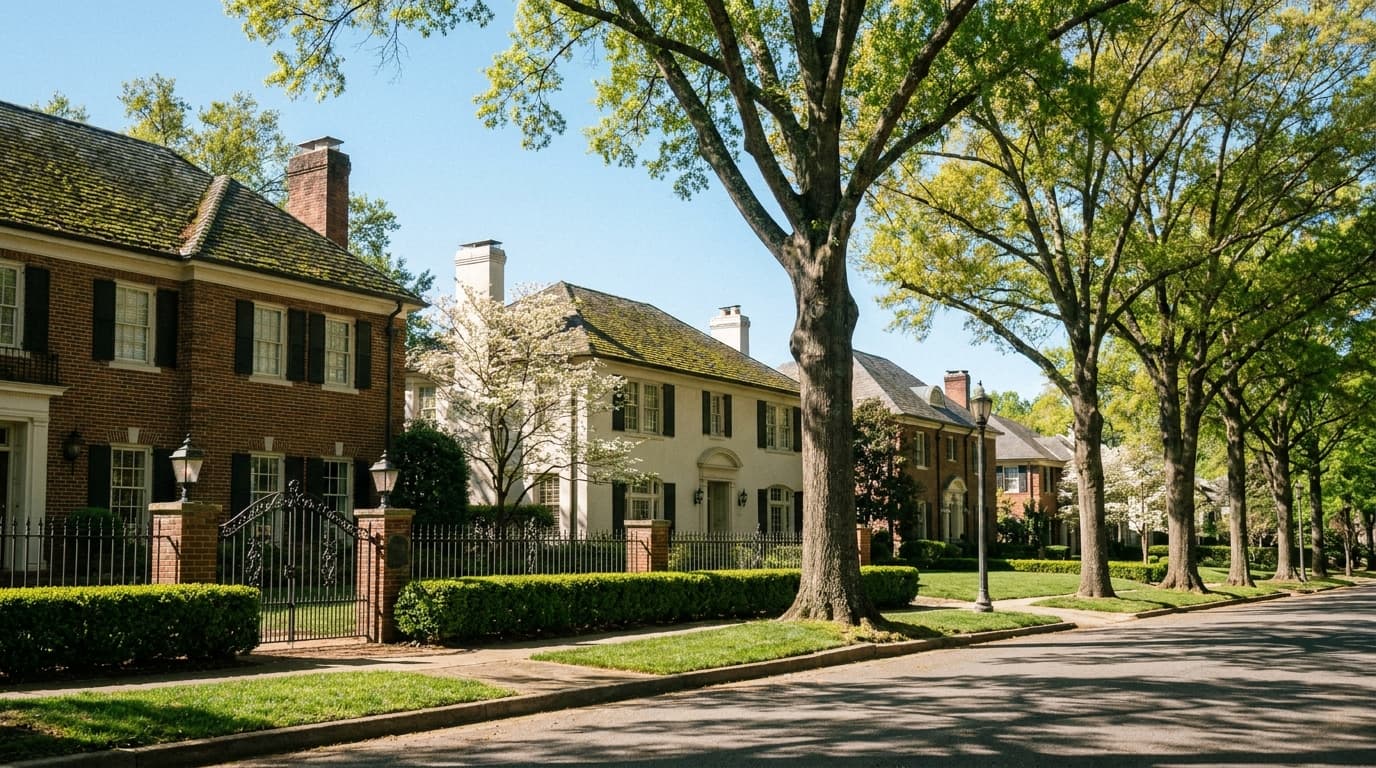
Forest Park sits in the urban residential belt of Birmingham between Crestwood to the east and Highland Park to the west, with Clairmont Avenue as its northern edge and Montevallo Road defining its southern boundary. The neighborhood developed between 1910 and the late 1930s as a streetcar suburb served by the Birmingham Electric Company's Crestwood line — which is why the street grid is walkable, the lots are modest, and the homes are built to a human scale that post-war suburban construction abandoned. The housing stock is what makes Forest Park distinctive. Craftsman bungalows dominate the side streets off Montevallo Road and Clairmont Avenue — one and one-and-a-half story homes with wide front porches, exposed rafter tails, and built-in cabinetry that homeowners have been restoring for thirty years. Tudor revival cottages appear on the larger corner lots and the streets closer to the golf course. The occasional Colonial four-square anchors the intersections. None of these homes were built for central air. All of them have had HVAC retrofitted at some point — usually multiple times. The HVAC retrofit history in Forest Park is the story of every decade of the twentieth century making its mark on a house not designed for it. Window units gave way to add-on cooling systems in the 1960s. Central air using the existing gravity furnace ducts arrived in the 1970s. Attic-based air handlers with flex duct appeared in the 1980s. The result in most Forest Park homes is a layered system where the current equipment is sitting on top of ductwork infrastructure that nobody has touched in thirty years — and often never designed for the home's actual airflow requirements. Forest Park's urban density means condensers are often tucked into side yards between homes built close to the property line. Shading, restricted airflow, and proximity to neighboring structures create outdoor unit conditions that reduce heat rejection capacity. The neighborhood's mature tree canopy — oaks and sweetgums that predate the homes themselves — loads condenser coils with pollen in spring and debris in fall at rates requiring more frequent cleaning than open-lot suburban properties.
The Ductwork Problem — Every Forest Park Bungalow Has One
Here is how HVAC retrofit history works in a 1925 Forest Park bungalow. The house was built without air conditioning. In the 1960s, the previous owner added a window unit or two. In the 1970s, a contractor installed central air using the existing gravity furnace ducts — which were sized for slow-moving gravity convection, not for a fan coil pushing air at 400 CFM. The return was whatever space was available. The supply runs were cobbled through the existing floor cavities. In the 1980s, a new contractor replaced the equipment and added two flex duct runs to the back bedrooms through the attic. In the 2000s, someone replaced the air handler and the outdoor unit without touching the ducts. Today the homeowner wonders why the new equipment doesn’t perform like the contractor said it would. It is because three generations of retrofit contractors optimized for what was easy to install, not for what the building actually needs. We fix this by measuring static pressure, mapping what is connected to what, and telling you honestly what the ductwork requires before we quote equipment.
Why Ductless Makes Sense in Forest Park
The ductless mini-split is not a compromise solution in Forest Park — it is often the right one. A 1920 Craftsman bungalow with plaster walls, no attic clearance, and a floor plan under 1,200 square feet does not need a central system. It needs a 12,000 BTU outdoor unit, a wall cassette in the living room, and a second cassette in the bedroom wing. The installation is clean, the plaster stays intact, the basement or attic stays free of equipment, and the system performs at a level that no retrofit central system in that building envelope can match — because it was sized for the actual load and positioned where the air goes, not where the contractor could reach with a saw.
| Era | Style & Size | Common HVAC Issues |
|---|---|---|
| 1910–1930 | Craftsman bungalow, 1–1.5 story, 900–1,400 sq ft | No original ductwork — ductless retrofit often cleanest solution. Limited attic clearance for air handler. Older electrical panels. |
| 1930–1945 | Tudor revival and Colonial four-square, 1,400–2,200 sq ft | Gravity furnace duct repurposed for central air — undersized returns, poor airflow balance. Plaster wall complications for line-set routing. |
| 1980s–present retrofits | Attic air handler with flex duct added to any home | Flex duct deterioration in attics reaching 140°F. Undersized return grilles. Oversized equipment short-cycling in tight-envelope historic homes. |
HVAC Services Available in Forest Park
Field Notes from Forest Park
Ductless retrofit, Craftsman bungalow off Montevallo Road
“1923 bungalow with zero attic clearance and plaster walls. Previous owner had a window unit in every room. Installed a two-head Mitsubishi mini-split — one outdoor unit, one head in the living area, one in the bedroom wing. House has been comfortable every summer since without touching the historic plaster.”
— Service note, Forest Park
Static pressure diagnosis, Tudor revival corner lot
“Homeowner replaced their air handler two years prior and it still felt weak. Measured static pressure at 1.1 in. w.c. — nearly double the acceptable limit. Found the return duct had been reduced from 14-inch to 10-inch at the plenum by a previous contractor. Re-opened the return to correct size, re-sealed the plenum. System performance changed immediately.”
— Service note, Forest Park
Attic flex duct replacement, 1930s four-square
“Three flex runs in a 140°F attic that had turned brittle and separated at the collar connections. All three rooms those runs served were consistently 8°F warmer than the thermostat set point. Replaced with rigid metal laterals insulated to R-8. Temperature delta across the house corrected within one cooling cycle.”
— Service note, Forest Park
Condensate drain reroute, bungalow with basement
“Air handler in the basement with a drain line running uphill before exiting — clogged every summer. Re-routed with correct pitch to a floor drain, added a condensate pump with float switch safety. No more summer shutdowns.”
— Service note, Forest Park
Forest Park Neighborhoods We Serve
Montevallo Road Corridor
The spine of Forest Park running east-west, lined with Craftsman bungalows and small Tudor revivals from the 1920s and 1930s.
Clairmont Avenue District
The northern edge of Forest Park bordering Crestwood, with slightly larger homes and more infill construction from the 1940s.
Golf Course Perimeter
The southern and eastern edge of Forest Park adjacent to the Highland Park Golf Course, with the neighborhood's largest lots and homes.
HVAC Questions from Forest Park Homeowners
Nearby Service Areas
Ready for reliable HVAC service in Forest Park?
Call 24/7 for dispatch. Written estimates before work begins.
Call (205) 206-7030