Ductless Mini-Splits for Older Alabama Homes: Retrofit Guide
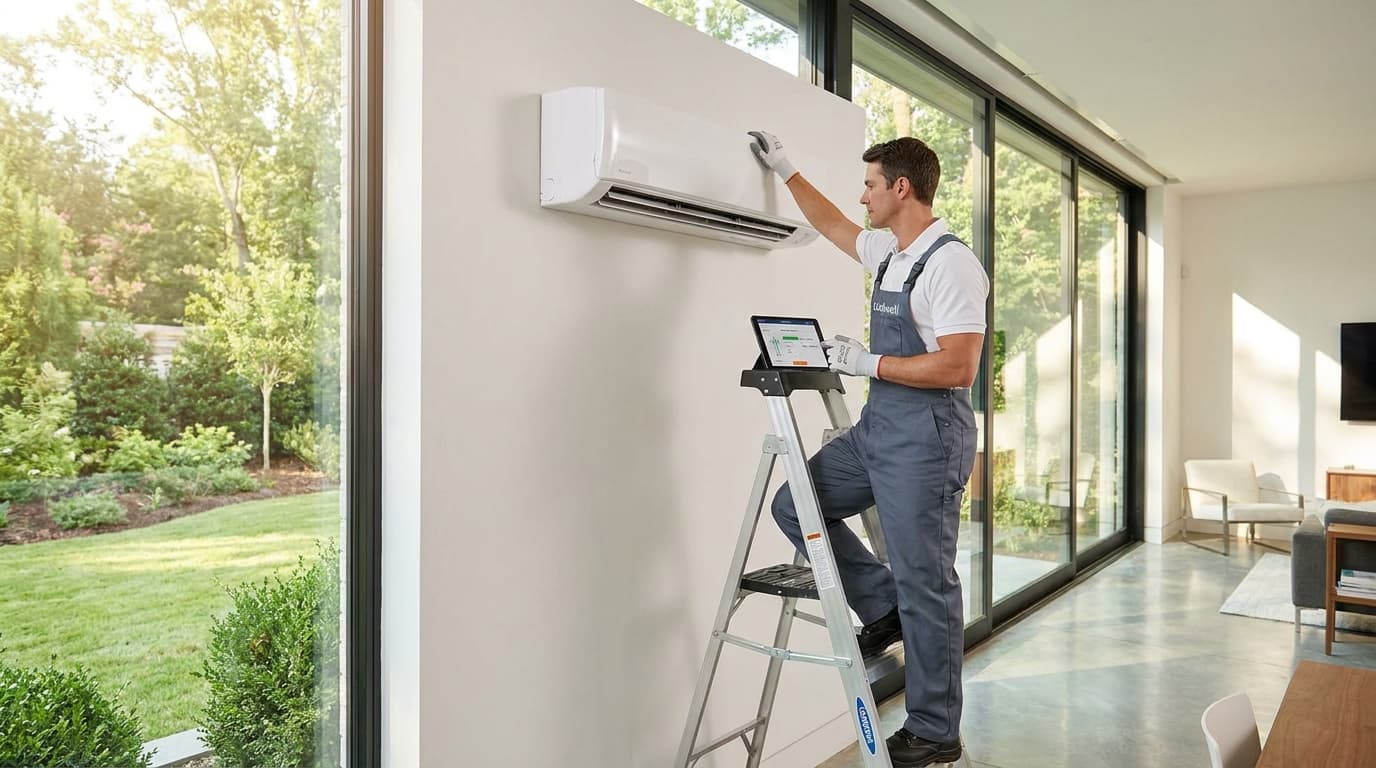
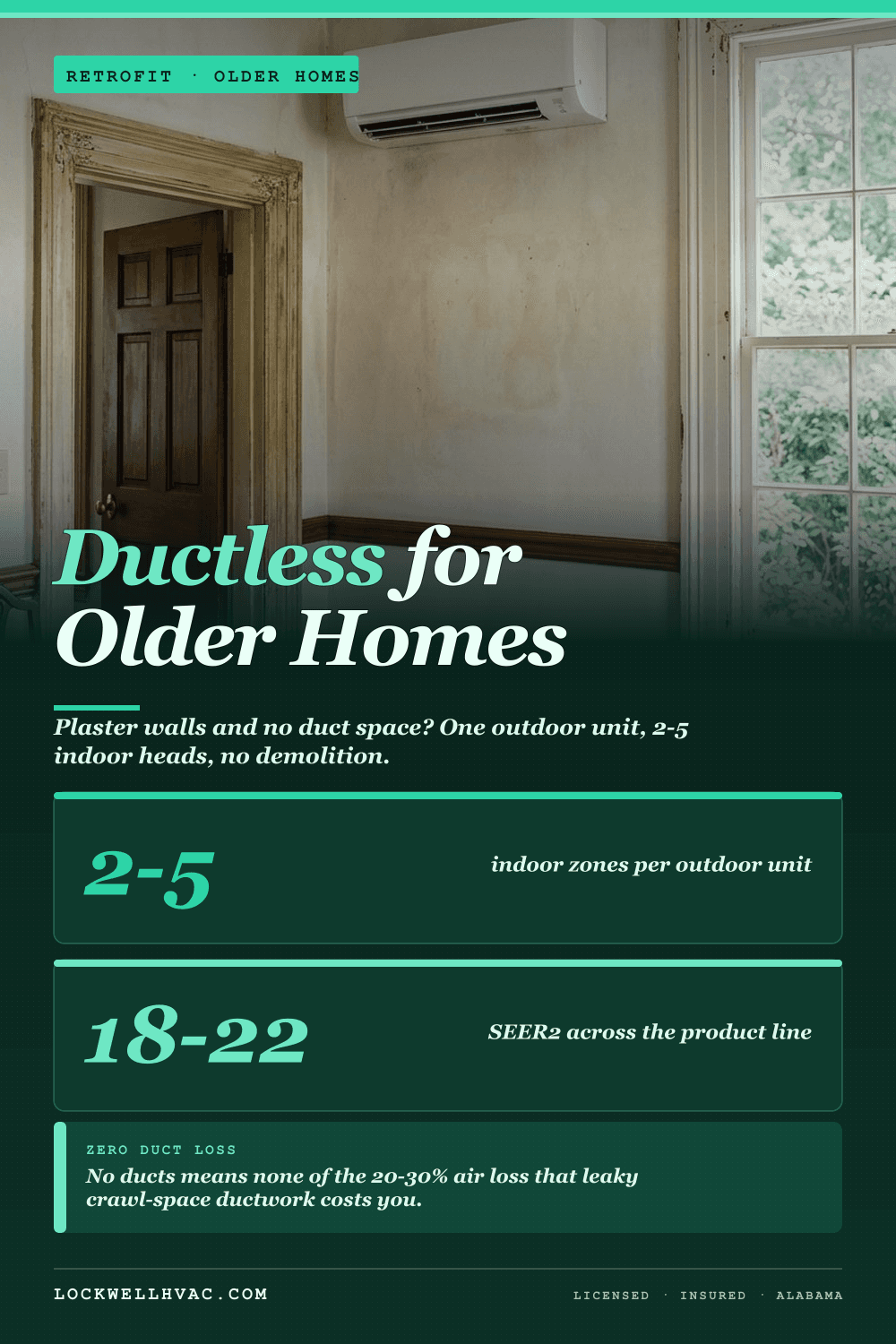
For pre-1960 homes in Bessemer Jonesboro, Birmingham Norwood, downtown Irondale, and Hueytown McAdory where running traditional ductwork through plaster walls or shallow crawl spaces is impractical, a multi-zone ductless mini-split is usually the cleanest retrofit. One outdoor unit drives 2-5 indoor heads, each with its own thermostat. Installation takes 1-3 days depending on number of zones, and no walls get torn apart.
The Older-Home Problem
Walk through a 1940s bungalow in Fountain Heights or a 1920s home in downtown Irondale. You will see the same thing: plaster walls, lath-and-plaster ceilings, hardwood floors, and almost no modern mechanical chase space. The original heating system was a gravity furnace with huge trunk ducts, a boiler with radiators, or — in the oldest homes — no central system at all.
When central AC arrived in the 1960s and 1970s, contractors retrofitted ducts through whatever space they could find: shallow crawl spaces, stud bays, shared-wall chases, attic runs dropped through closets. The results are inconsistent — some rooms get reasonable airflow, others are served by a 4-inch flex duct squeezed through a joist bay.
For the homes that were never retrofitted, the options today are: (a) major demolition to install ductwork, (b) high-velocity small-duct systems like Unico or SpacePak, or (c) ductless mini-splits. For most of our service territory, ductless is the right answer.
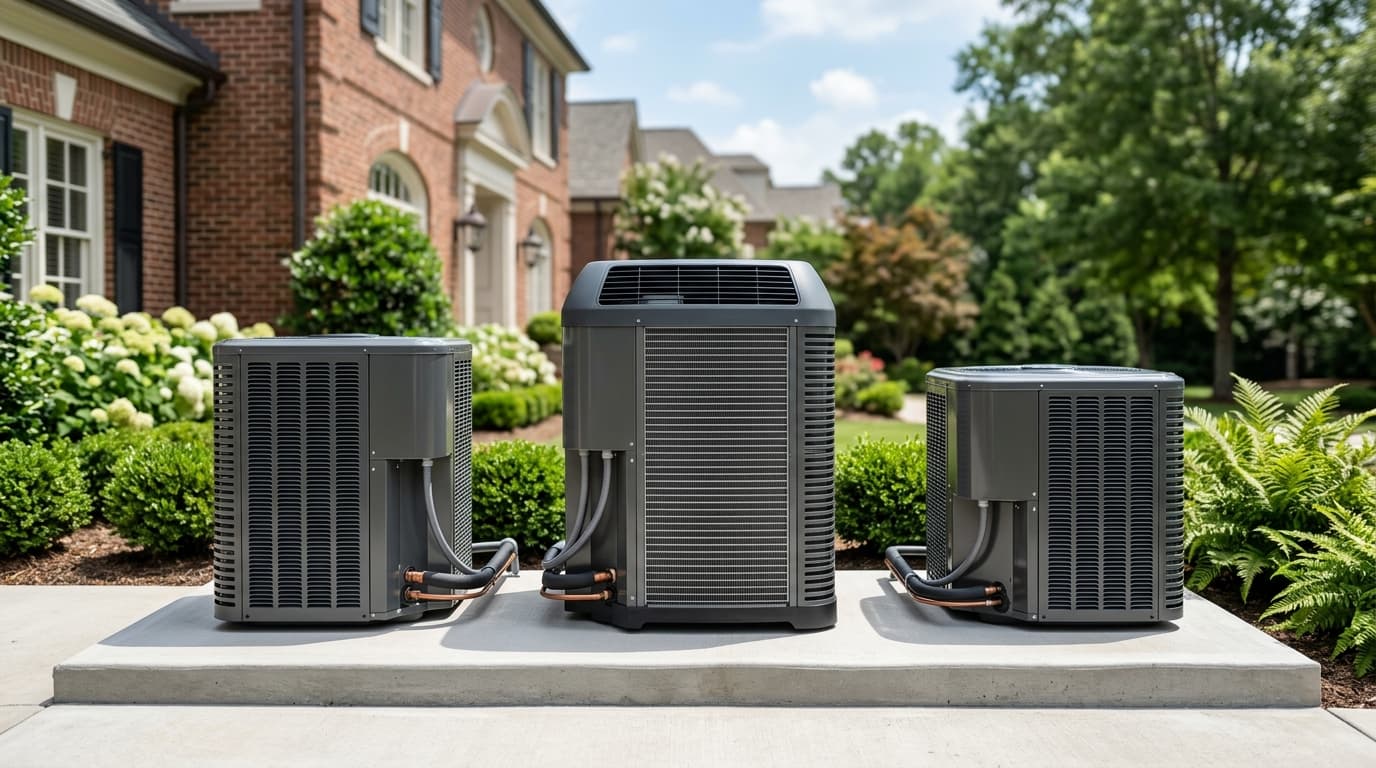
Typical capacity of a single outdoor multi-zone heat pump driving wall cassettes or concealed-duct air handlers across an older Alabama home — enough to condition the primary living areas without duct retrofit.
How Ductless Mini-Splits Work
A ductless system is a heat pump with a different indoor distribution strategy. The outdoor unit (condenser + compressor) sits on a pad or wall bracket outside. Refrigerant line sets run through a small wall penetration to one or more indoor heads — either wall-mount cassettes, ceiling cassettes, or short concealed-duct cabinets that serve two or three nearby rooms.
Each indoor head has its own thermostat or remote control. You set the bedroom to 72°F and the living room to 75°F and the kitchen to 78°F — the system modulates compressor capacity and per-head airflow to hit all three setpoints simultaneously. That level of control is impossible on a single-thermostat ducted system.
The inverter compressor in modern ductless systems (Mitsubishi H2i, Daikin Aurora, Fujitsu Halcyon) modulates from roughly 15% to 125% of nominal capacity. This means the system never overshoots or short-cycles, and part-load efficiency is extremely high — typically 18-22 SEER2 across the product line. The U.S. DOE publishes reference efficiency standards for ductless systems alongside ducted central AC (https://www.energy.gov/energysaver/ductless-mini-split-air-conditioners).
Why Ductless Works Well In Older Alabama Homes
**No duct losses.** Older retrofitted ductwork in Hueytown McAdory crawl spaces or downtown Irondale shallow attics typically loses 20-30% of conditioned air to leakage and heat gain. Ductless has zero duct losses because there are no ducts.
**Room-by-room control.** Older homes with converted additions, sunrooms, or dormers have different comfort needs in different rooms. Ductless handles that natively.
**Preservation-friendly installation.** Interior plaster and lath walls stay intact. Refrigerant line sets route through a single chase (often an interior closet or an exterior soffit) to reach multiple heads. Historic trim, wainscoting, and crown molding stay untouched.
**Heat-pump-only operation.** No gas service required, no flue venting, no combustion air makeup. Important in Birmingham Norwood and Bessemer Abbott historic homes where gas service is inconsistent.
**Cold-climate capability.** Modern H2i-rated Mitsubishi units maintain heating output down to -13°F per the manufacturer (https://www.mitsubishicomfort.com). Alabama winter lows rarely approach that threshold, so ductless works as a full-year heating and cooling solution in our climate. For a deeper read on realistic equipment lifespans in our humidity, see how long HVAC systems last in Alabama.
Where Ductless Is Not The Right Answer
**Whole-home conditioning in larger homes.** For a 3,000 sq ft modern home, the number of indoor heads required (often 6+) drives cost above a ducted alternative. Large homes should generally use ducted systems with ductless heads only for specific outlier rooms like finished attics or sunrooms.
**Homeowners who dislike the aesthetic.** Wall-mount cassettes are visible. Ceiling cassettes require drop-ceiling space. Concealed-duct cabinets need soffit or closet space. If visible hardware is unacceptable, high-velocity small-duct systems (Unico SDHV, SpacePak) are an alternative — more expensive, but nearly invisible in finished space.
**Homes with functional ducted systems needing only minor extensions.** If the central system already works well and only one room — an addition, a converted garage — needs supplemental conditioning, a single-zone ductless head is cheaper than a full multi-zone install. That is an additive retrofit, not a full ductless conversion.
Installation Walkthrough For An Older Home
**Day 1: Site walk and Manual J.** Measure envelope, identify head locations, plan line-set routing, run Manual J to size each zone.
**Day 1-2: Outdoor unit placement.** Concrete pad on a level ground surface or wall-mount bracket on a sound exterior wall. Disconnect, whip, and dedicated breaker installed per National Electrical Code (the NEC is published and adopted widely, including by Alabama — see https://www.nfpa.org/codes-and-standards/nfpa-70-standard-development/70).
**Day 1-3: Indoor head installation.** Wall-mount cassettes hung on mounting plates at the chosen locations. Line sets and condensate drains routed through a small exterior wall penetration (typically 2.5-3 inch diameter).
**Day 2-3: Line-set routing.** Line sets from each head to the outdoor unit, routed through a single interior chase, exterior soffit, or concealed exterior run. Line set covers (ducts for the line sets) available in paintable finishes.
**Day 2-3: Commissioning.** Evacuate line sets to 500 microns with a two-stage vacuum pump. Pressure-test with nitrogen before opening the factory refrigerant charge. Start the system, verify superheat and subcooling, pair each indoor head to the outdoor unit, commission the remote controls.
Most 2-3 zone installs finish within 1-2 working days. 4-5 zone installs run 2-3 days. No plaster demolition. No major furniture disruption.
Cost Framework (Ranges, Not Promises)
Installed cost varies with brand, number of zones, head type, and line-set routing difficulty. Ranges we see in our service area:
- 1-zone install (single head, 600-900 sq ft): lower-cost single-zone residential install - 2-zone install (two heads, 1,000-1,500 sq ft): mid-range - 3-zone install (three heads, 1,500-2,200 sq ft): higher range - 4-5 zone install (whole-home 2,200+ sq ft): premium range
We quote every job in writing after a site visit. Generic online figures do not account for line-set length, condensate routing, electrical scope, or Alabama permit fees. Contact the city building department of record — City of Birmingham, City of Bessemer, City of Gardendale — for mechanical permit requirements specific to your address.
Related Services
- HVAC Installation — see /services/hvac-installation - Heat Pump Service — see /services/heat-pump - Manufacturers we install (Mitsubishi, Daikin, Fujitsu) — see /manufacturers - Birmingham historic-home retrofits — see /areas/birmingham
Need HVAC service in the Birmingham area?
Available 24/7. Licensed and insured. Written estimates before work begins.
Call (205) 206-7030Frequently Asked Questions
Visual Guide
Compiled by the HVAC technicians at Lockwell HVAC in Gardendale, Alabama. Our installation and sizing notes come from load calculations and equipment swaps on real homes in the North Birmingham metro, where right-sizing and proper startup decide whether a new system actually performs.
- U.S. Department of Energy — Energy efficiency and maintenance guidelines
- ENERGY STAR — Thermostat and installation efficiency standards
- ASHRAE — Coil cleaning and maintenance guidelines
- ACCA — Manual J load calculation standards and equipment lifespan data
- U.S. EPA — Refrigerant regulations and indoor air quality guidance
- NFPA — Electrical safety and fire prevention
- CPSC — Carbon monoxide safety data
- NADCA — Duct cleaning standards
Bookmark this page for reference. Share it with a neighbor who might find it useful. If you have questions about anything covered here, call us directly — a real person answers, not a recording.
Read Next