R-454B Refrigerant Guide for Birmingham AL
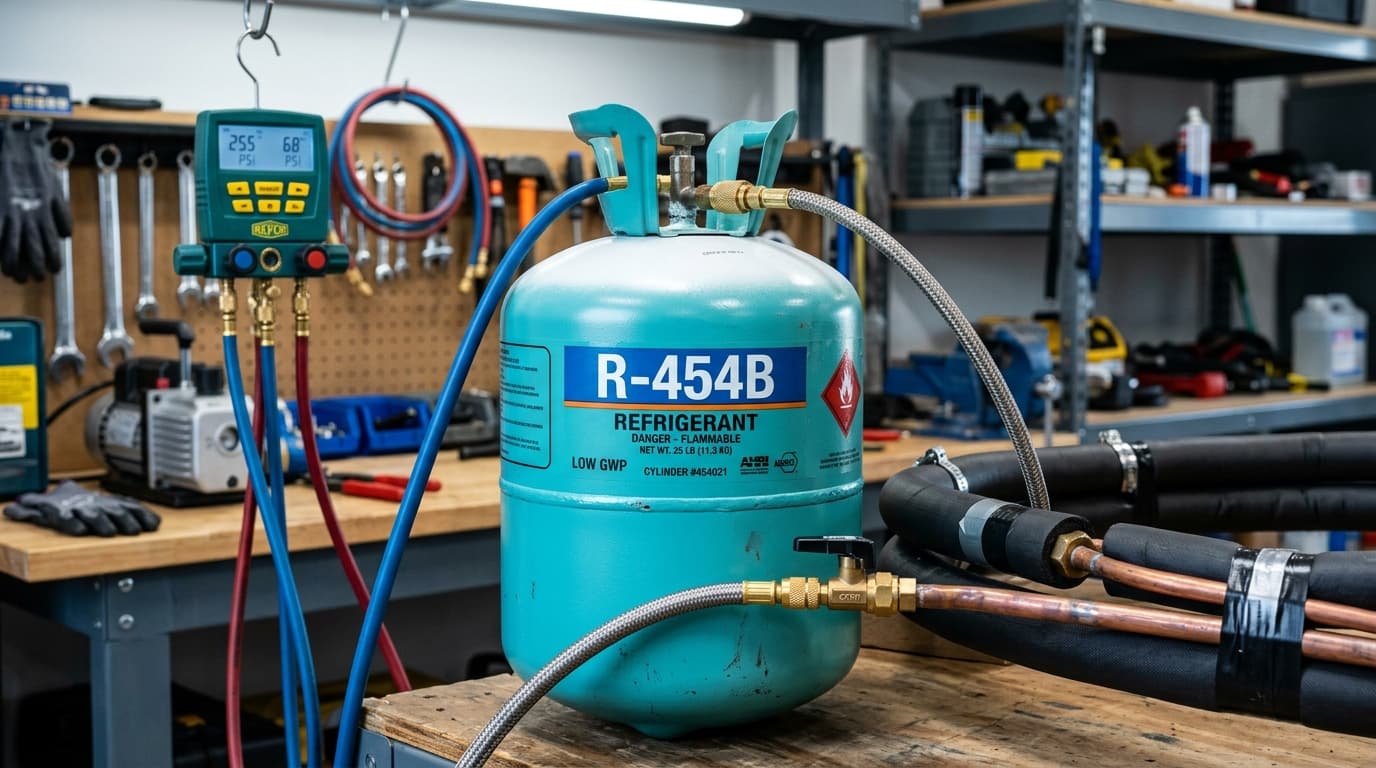
R-454B is the new low-GWP refrigerant replacing R-410A in residential AC systems starting in 2025. If your current system uses R-410A, nothing changes — it keeps running. The switch only affects new equipment purchases.
What Is R-454B and Why Does It Matter
R-454B refrigerant is the new standard replacing R-410A in residential air conditioning systems, and Birmingham homeowners buying new AC equipment need to understand what this change means before they sign a contract.
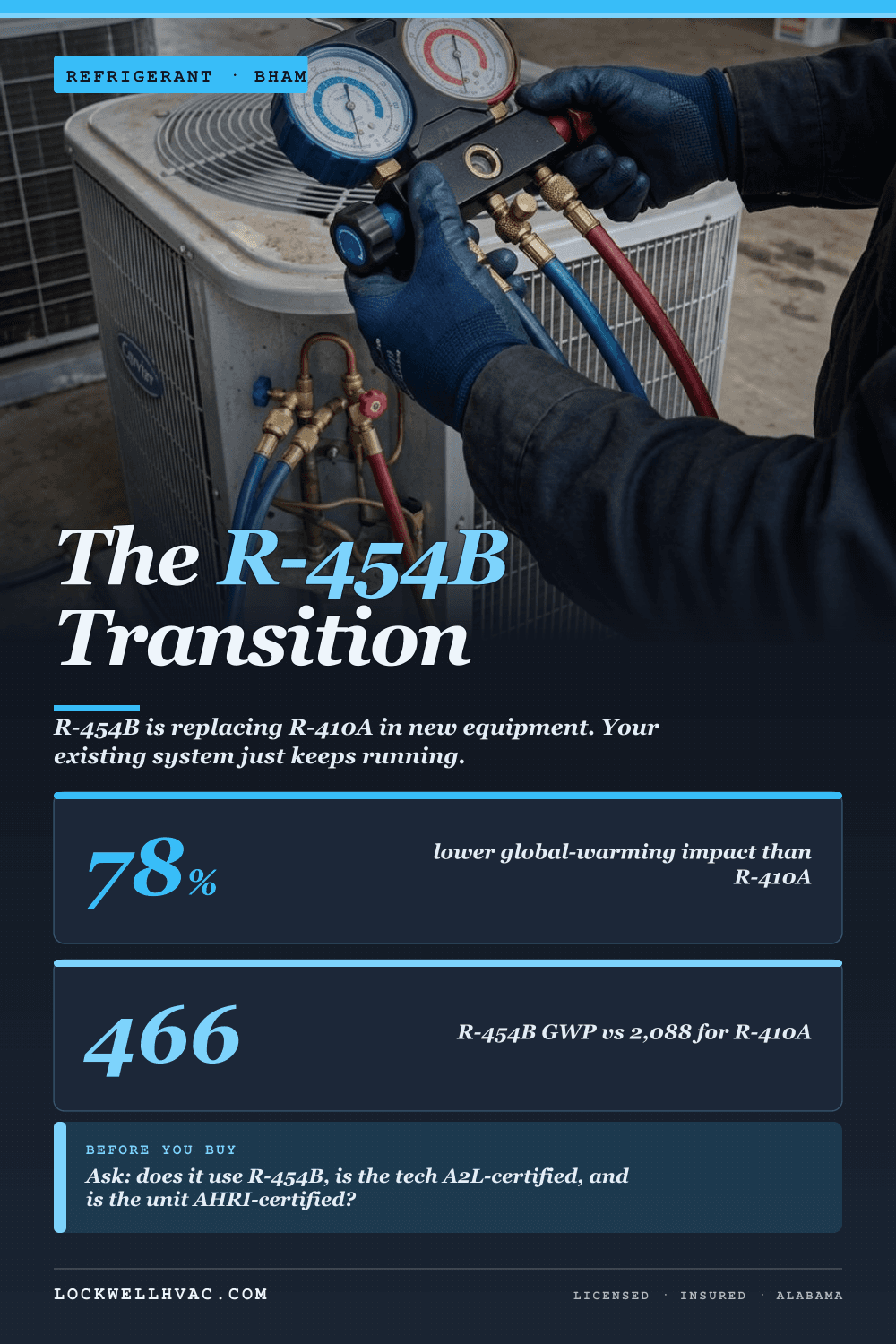
The EPA's AIM Act mandated a phase-down of high global warming potential (GWP) refrigerants beginning in 2025. R-410A has a GWP of 2,088 — meaning it traps 2,088 times more heat than CO2 when released. R-454B has a GWP of 466, a 78 percent reduction. That is why the industry is switching.
New residential AC and heat pump equipment manufactured after January 1, 2025 must use R-454B or another low-GWP alternative. The old stuff — your existing R-410A system — keeps running exactly as it always has. Nothing about the regulation forces you to replace a working system early.
Reduction in global warming potential from R-410A (GWP 2,088) to R-454B (GWP 466), per EPA AIM Act data
What "A2L" Classification Actually Means
R-454B carries an A2L safety classification from ASHRAE. The "A" means low toxicity. The "2L" means mildly flammable — it can burn under specific conditions but is far harder to ignite than propane or natural gas.
This is where some homeowners panic unnecessarily. Mildly flammable is not the same as dangerous in normal operation. R-454B requires higher ignition energy than common flammable gases and will not ignite easily under typical residential conditions.
What the A2L classification does require is updated installation standards. Technicians handling R-454B equipment must follow specific procedures, and some equipment rooms or enclosed spaces need ventilation considerations. The 2023 updates to ASHRAE Standard 15 and the 2024 editions of national mechanical codes address these requirements. Licensed Alabama HVAC contractors will be trained and equipped to handle R-454B safely.
If a contractor tells you R-454B is dangerous in your home, ask them to cite the specific scenario. In normal residential conditions, a properly installed R-454B system presents no greater safety concern than your current equipment.
What This Means for Your Existing R-410A System
Nothing changes for systems currently running R-410A. The phase-down applies to new equipment production — it does not force replacement of existing systems. Your R-410A system can continue operating, receiving service, and being repaired for its full service life.
What does change is the cost and availability of R-410A refrigerant over time. Production of R-410A is being reduced under the AIM Act phase-down schedule. As supply tightens, prices will rise — similar to what happened with R-22 after its phase-out began.
If you have an older R-22 system, you already lived through this. R-22 production ended in 2020, and the remaining supply commands premium prices. R-410A will follow a similar trajectory over the next several years — not as dramatic as R-22 because existing equipment can still be serviced, but the direction is clear. If you are sitting on a 12-plus year old system and weighing the next move, our guides on heat pump vs furnace for Alabama homes and how long HVAC systems last in Alabama lay out the decision points.
For Birmingham homeowners with R-410A systems: keep them well maintained. Catch refrigerant leaks early. Every pound of R-410A you do not lose to a leak is a pound you do not have to pay premium prices to replace as supply tightens.
Birmingham's Long Cooling Season Makes Refrigerant Efficiency More Important
Here is something specific to our area: Birmingham runs air conditioning from April through October — roughly six months of meaningful cooling load. That is longer than most of the country outside of the deep South and Southwest.
That extended cooling season means refrigerant efficiency matters more here than it does in, say, Minneapolis. A system with a slow refrigerant leak loses capacity gradually, forces the compressor to work harder, and runs longer to hit the thermostat setpoint. Every extra hour of runtime during a Birmingham summer shows up on your Alabama Power bill.
When you buy new equipment that uses R-454B, you are getting a system engineered from the ground up for the new refrigerant. The compressors, heat exchangers, and expansion valves are all matched to R-454B's thermodynamic properties. That matching produces the efficiency ratings the system is rated for.
Systems retrofitted to run alternative refrigerants in existing equipment — a practice sometimes called "drop-in replacement" — often fall short of the efficiency promised because the system components were not designed for that refrigerant. New R-454B equipment does not have that problem.
Average cooling season length in Birmingham AL, longer than most U.S. cities outside the deep South — making refrigerant efficiency savings compound faster
What to Ask Before Buying a New AC System
When you are ready for new equipment, ask your contractor these questions directly:
Does this unit use R-454B? New equipment should. If they are trying to sell you remaining R-410A inventory, understand that you are buying a system using a refrigerant the industry is phasing away from.
Is the contractor trained and certified for A2L refrigerant handling? EPA Section 608 certification is required for all refrigerant handling. Ask specifically about A2L training.
What does the warranty cover regarding refrigerant? Some manufacturers require that only authorized technicians handle refrigerant service to maintain warranty coverage. Know what your warranty requires before the first service visit.
Is the equipment AHRI-certified? The Air-Conditioning, Heating, and Refrigeration Institute certifies equipment efficiency claims. An AHRI certificate for your specific indoor-outdoor unit combination verifies that the efficiency ratings are real, not just nameplate marketing.
Need HVAC service in the Birmingham area?
Available 24/7. Licensed and insured. Written estimates before work begins.
Call (205) 206-7030Frequently Asked Questions
Visual Guide
Compiled by the HVAC technicians at Lockwell HVAC in Gardendale, Alabama. The comparisons and explanations here are grounded in what we install and service every week across the North Birmingham metro, so the trade-offs reflect how systems hold up in Alabama homes rather than spec-sheet claims.
- U.S. Department of Energy — Energy efficiency and maintenance guidelines
- ENERGY STAR — Thermostat and installation efficiency standards
- ASHRAE — Coil cleaning and maintenance guidelines
- ACCA — Manual J load calculation standards and equipment lifespan data
- U.S. EPA — Refrigerant regulations and indoor air quality guidance
- NFPA — Electrical safety and fire prevention
- CPSC — Carbon monoxide safety data
- NADCA — Duct cleaning standards
Bookmark this page for reference. Share it with a neighbor who might find it useful. If you have questions about anything covered here, call us directly — a real person answers, not a recording.
Read Next