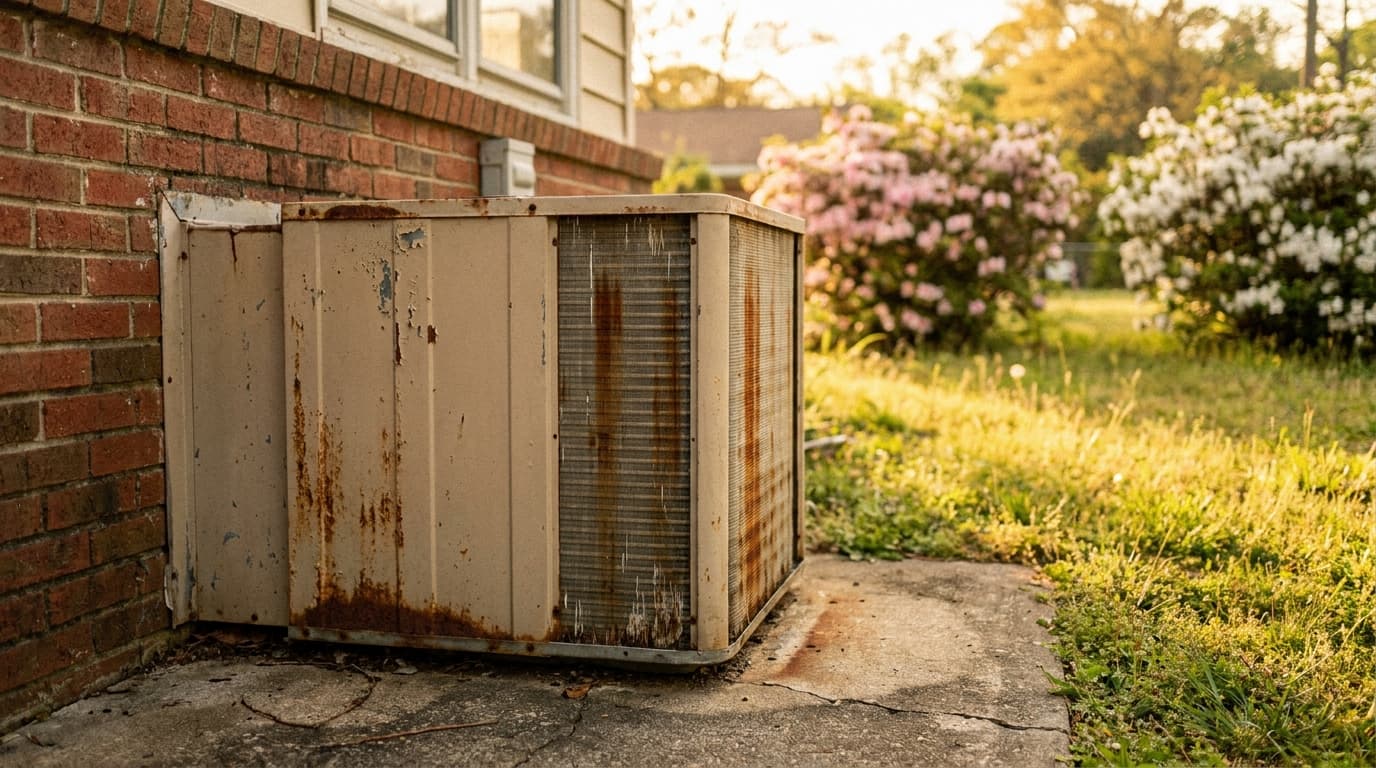
Mold in Air Ducts: What Birmingham AL Needs
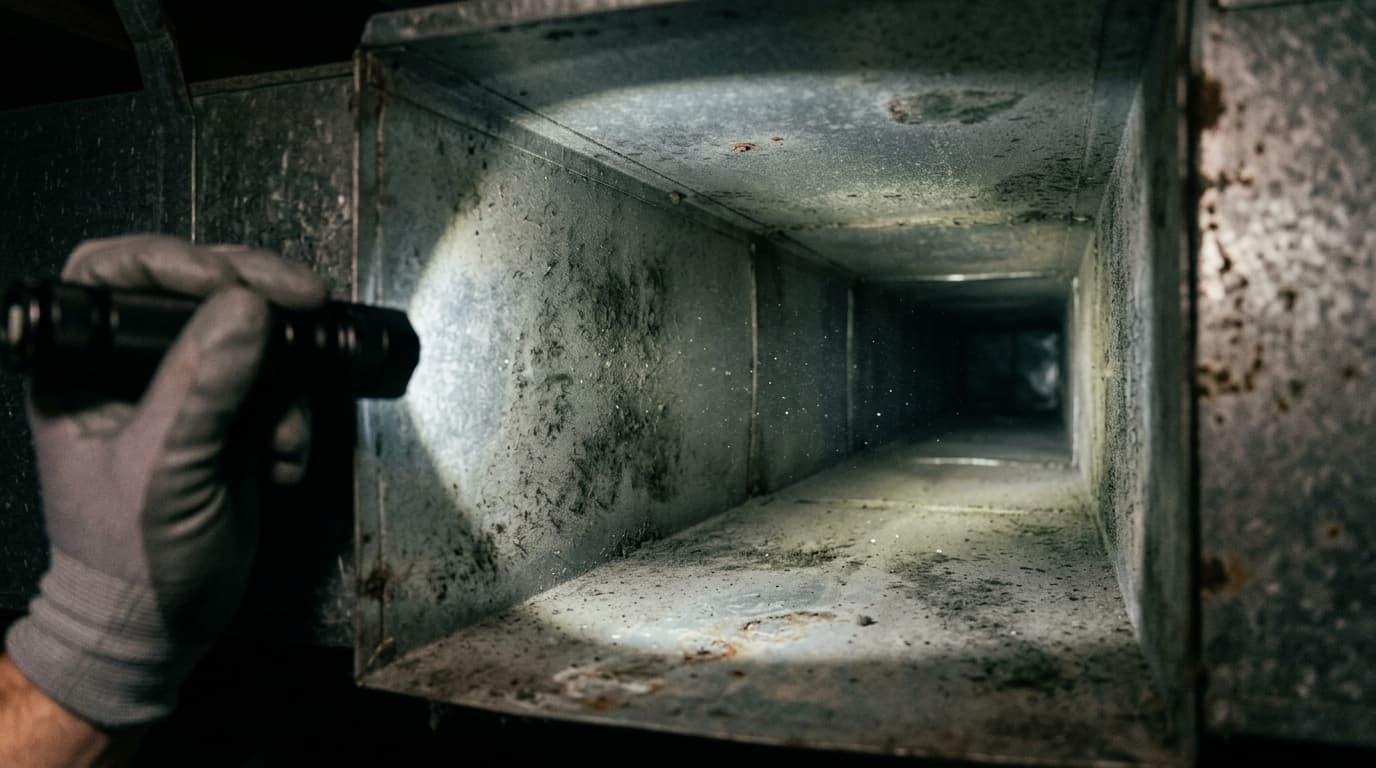
Musty smell from vents, visible dark growth at registers, and unexplained allergy symptoms when the AC runs are the three main signs of duct mold. Birmingham's 70-85% summer humidity creates real conditions for duct mold growth — especially in crawl-space and attic ductwork.
Why Mold in Air Ducts Is a Real Problem in Birmingham
Mold in air ducts is not a theoretical concern in Birmingham — our 70 to 85 percent summer humidity creates exactly the conditions that support biological growth inside ductwork, and thousands of homes across Gardendale, Center Point, Bessemer, and the surrounding communities have duct systems that see it.
Here is the physics: your AC system pulls warm, humid indoor air across the cold evaporator coil, dropping the temperature below the dew point and condensing moisture out of the air. That process works. What does not always work is where that condensation goes next.
In properly functioning systems, condensation drips off the coil into the drain pan and flows out through the condensate line. But in systems with clogged drain pans, oversized equipment that short-cycles, or ductwork running through unconditioned crawl spaces and attics, moisture finds places to settle. Mold does not need much — a surface above 70 percent relative humidity for an extended period is sufficient for many species. If you have already noticed ice on the lineset or a frozen coil, our guide to why your AC freezes up in Alabama and how to fix it covers the moisture-related root causes that often run alongside duct mold.
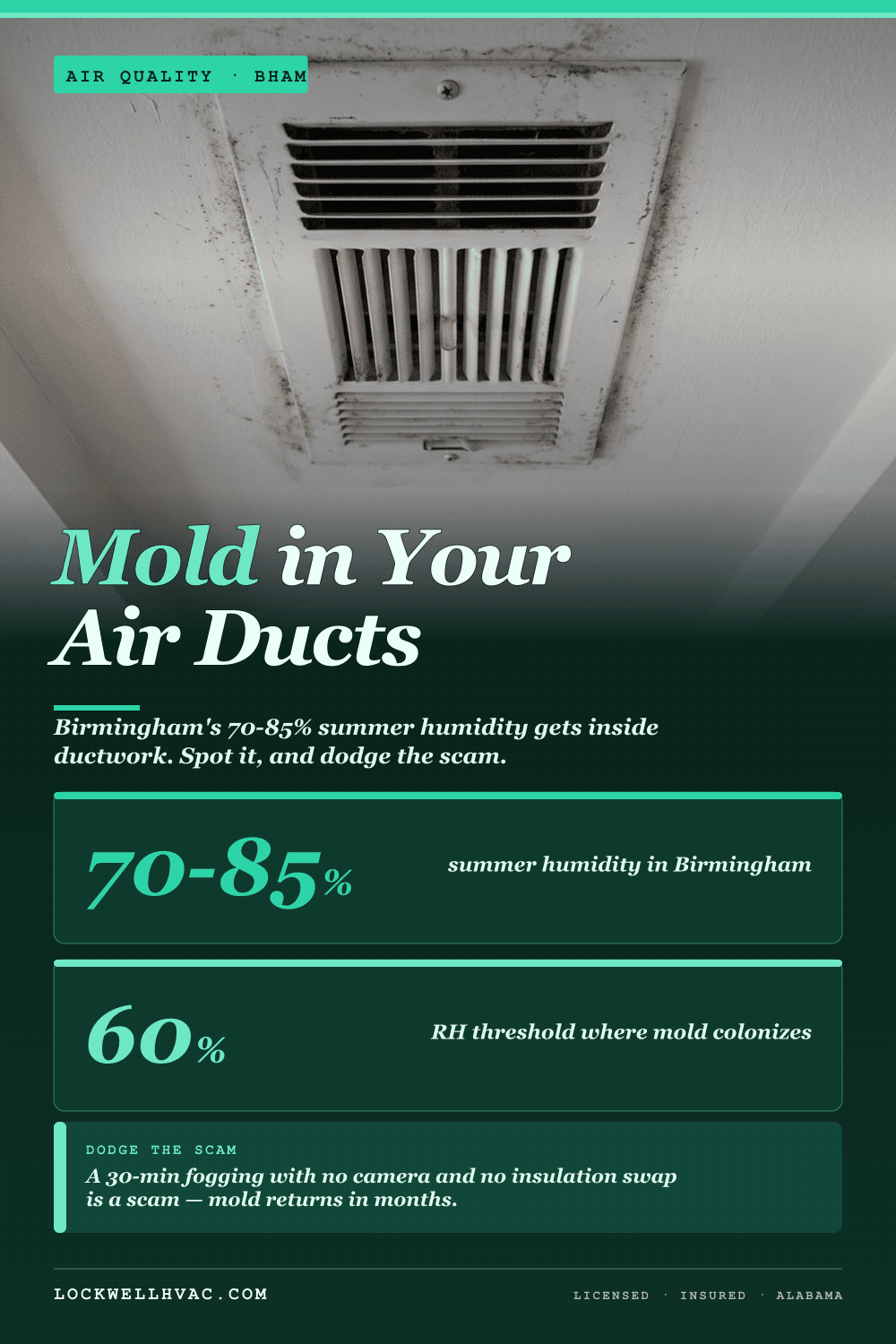
Average relative humidity range in Birmingham AL during summer months — well above the 60% threshold at which common household mold species begin to colonize surfaces
How to Spot Mold in Your Ductwork
You do not need to crawl under your house to spot potential duct mold. Three signs you can detect from inside your home:
Musty smell from supply vents. When you stand near an open supply register while the system runs and smell something earthy, musty, or like a damp basement, that is your first signal. The smell gets stronger when the system starts up after sitting idle because the fan disturbs whatever has settled in the ductwork.
Visible dark discoloration at or around vent registers. The registers themselves — the grilles in your ceiling or floor — are where duct air meets room air. Biological growth on or near the register is a sign that contamination exists deeper in the system. It is not always mold; it could be dust and debris accumulation. But dark, irregular staining warrants a closer look.
Unexplained allergy or respiratory symptoms that worsen when the AC runs. If household members experience runny nose, eye irritation, or worsened asthma symptoms specifically when the HVAC system is operating, airborne mold spores circulating from the duct system are a plausible cause.
To confirm, you need a camera inspection inside the ductwork. Visible signs from the register are suggestive, not conclusive.
When Duct Mold Is Dangerous vs. Cosmetic
Not all duct mold presents equal risk. The severity depends on the species, the extent of growth, the occupants of the home, and how aggressively the system is spreading spores into living spaces.
Cosmetic surface mold on metal duct surfaces — a thin layer that has not penetrated the substrate — is a legitimate remediation target but not an acute emergency for healthy adults. It needs to be addressed, but it is a scheduled service call, not an evacuation situation.
Mold in insulated flex duct is more serious. Flex duct has a fiberglass or foam insulation layer that mold can penetrate. Once biological growth gets into the insulation, cleaning the surface is insufficient — the affected sections need to be replaced. Trying to spray-clean contaminated flex duct insulation traps live mold inside a material that cannot be fully reached.
Mold near the air handler — on the evaporator coil, inside the plenum, or in the air handler cabinet itself — is the highest concern. Equipment in these locations affects every cubic foot of air your system delivers. An evaporator coil with biological growth is seeding every room of your house with spores every time the fan runs.
For homes with infants, elderly occupants, or immunocompromised family members, any confirmed duct mold warrants prompt professional remediation — not watchful waiting.
If your ductwork runs through a crawl space or unconditioned attic and you have not had it inspected in the past five years, schedule a camera inspection. Birmingham's humidity is not theoretical — it gets inside ductwork regularly, and early detection is far cheaper than full remediation after biological growth is established.
Proper Mold Remediation — What It Actually Looks Like
Legitimate duct mold remediation follows NADCA (National Air Duct Cleaners Association) standards and involves more than spraying something in your vents.
A proper remediation job starts with a full camera inspection to document the extent of contamination before any work begins. You should be able to see where mold growth exists and make an informed decision about remediation scope.
The cleaning process uses negative-pressure equipment — a powerful vacuum connected to the main duct trunk — to prevent contaminated material from being pushed into your living space during the process. Surface cleaning uses EPA-registered antimicrobial agents applied per manufacturer instructions.
Contaminated flex duct sections must be replaced, not cleaned. This is non-negotiable. A company that cleans heavily contaminated flex duct insulation and declares the job complete is cutting corners.
After remediation, a follow-up camera inspection confirms the results. Before-and-after documentation protects both you and the company.
The root cause — whatever created moisture conditions that allowed mold to grow — must be addressed or the mold returns. That might mean fixing a condensate drain, adding crawl space vapor barrier, insulating ductwork, or correcting an oversized system that short-cycles.
The Scam Warning — What Bad Companies Do
Duct mold is a high-margin fear sale for dishonest companies. Here is what the scam version looks like:
A company offers cheap duct cleaning. During the service, the technician shows you a photo (sometimes stock photos or photos from another job) and declares you have a severe mold problem requiring expensive remediation.
The "remediation" involves fogging the ducts with a spray product — sometimes labeled as antimicrobial, sometimes not — without negative-pressure cleaning, without replacing contaminated insulation, without camera documentation, and without addressing the moisture source. The job takes 30 minutes and costs hundreds of dollars.
The result: mold returns within months because nothing that caused it was addressed, and the surface spray only masked rather than eliminated growth.
Protect yourself: always ask for camera inspection documentation before and after any duct cleaning or mold remediation. Refuse any company that cannot show you evidence of contamination before they start work. Verify NADCA membership and Alabama HVAC contractor licensing.
Prevention — Making Your Ducts Hostile to Mold
The best mold remediation is prevention. Specific steps that reduce duct mold risk in Birmingham homes:
Keep your condensate drain clear. A clogged drain backs water up into the drain pan, which overflows into the air handler. Annual maintenance includes condensate drain flushing. Between visits, pour a cup of distilled white vinegar into the condensate pan access point every three to four months.
Insulate accessible ductwork in crawl spaces and attics. Uninsulated or poorly insulated ducts running through hot, humid unconditioned spaces create temperature differentials that cause condensation on duct surfaces. Properly insulated ducts stay closer to room temperature and condense far less moisture.
Address whole-home humidity. If your AC is correctly sized but indoor humidity remains above 60 percent, a whole-house dehumidifier adds standalone moisture removal capacity. This is common in older Center Point and Bessemer homes where building envelopes are loose enough to admit significant outdoor humidity.
Have ductwork sealed. Gaps and leaks in ductwork allow unconditioned air — at outdoor humidity levels — to infiltrate the duct system directly. Mastic sealing closes these entry points.
How quickly mold can become established in improperly insulated crawl-space ductwork in Birmingham's climate without regular inspection and maintenance
Need HVAC service in the Birmingham area?
Available 24/7. Licensed and insured. Written estimates before work begins.
Call (205) 206-7030Frequently Asked Questions
Visual Guide
Compiled by the HVAC technicians at Lockwell HVAC in Gardendale, Alabama. The comparisons and explanations here are grounded in what we install and service every week across the North Birmingham metro, so the trade-offs reflect how systems hold up in Alabama homes rather than spec-sheet claims.
- U.S. Department of Energy — Energy efficiency and maintenance guidelines
- ENERGY STAR — Thermostat and installation efficiency standards
- ASHRAE — Coil cleaning and maintenance guidelines
- ACCA — Manual J load calculation standards and equipment lifespan data
- U.S. EPA — Refrigerant regulations and indoor air quality guidance
- NFPA — Electrical safety and fire prevention
- CPSC — Carbon monoxide safety data
- NADCA — Duct cleaning standards
Bookmark this page for reference. Share it with a neighbor who might find it useful. If you have questions about anything covered here, call us directly — a real person answers, not a recording.
Read Next