AC Freezing Up: Causes & Fixes in Alabama | Lockwell HVAC
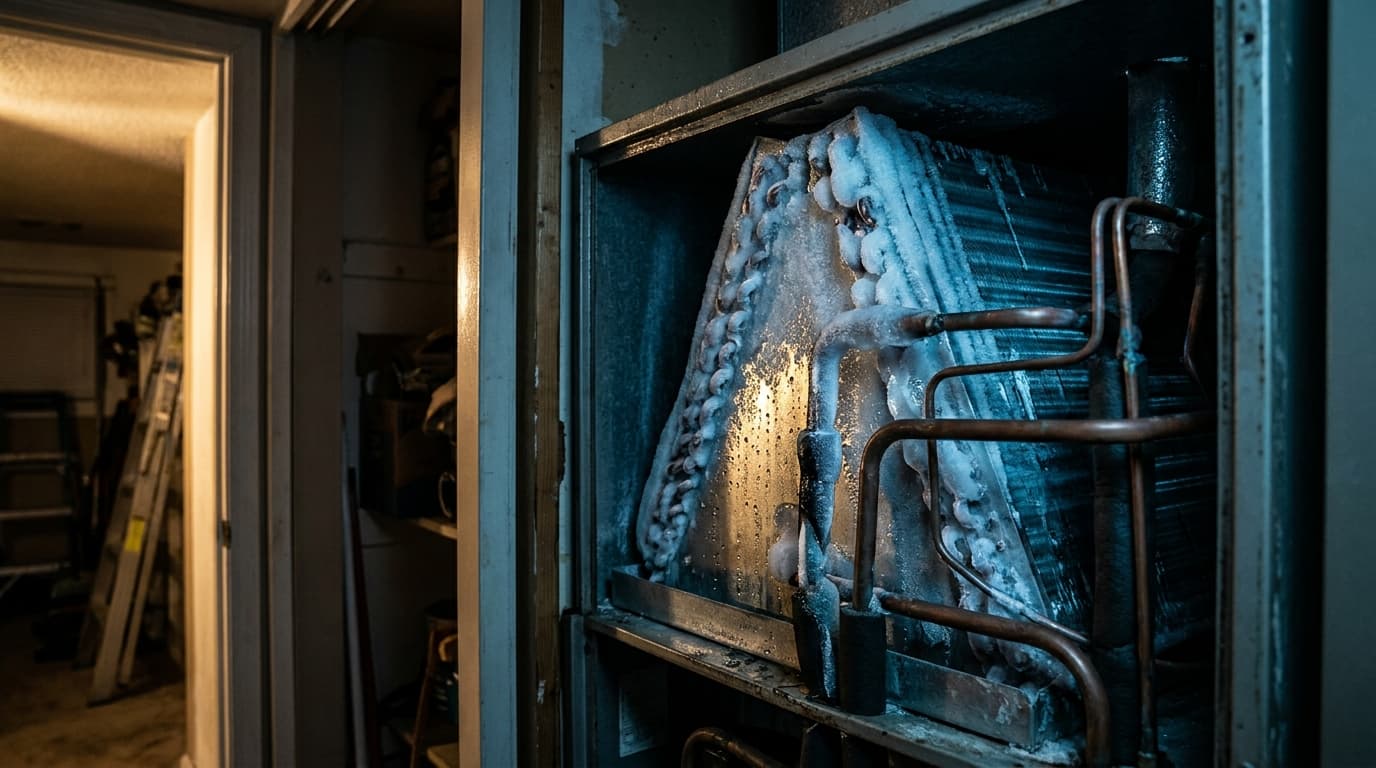
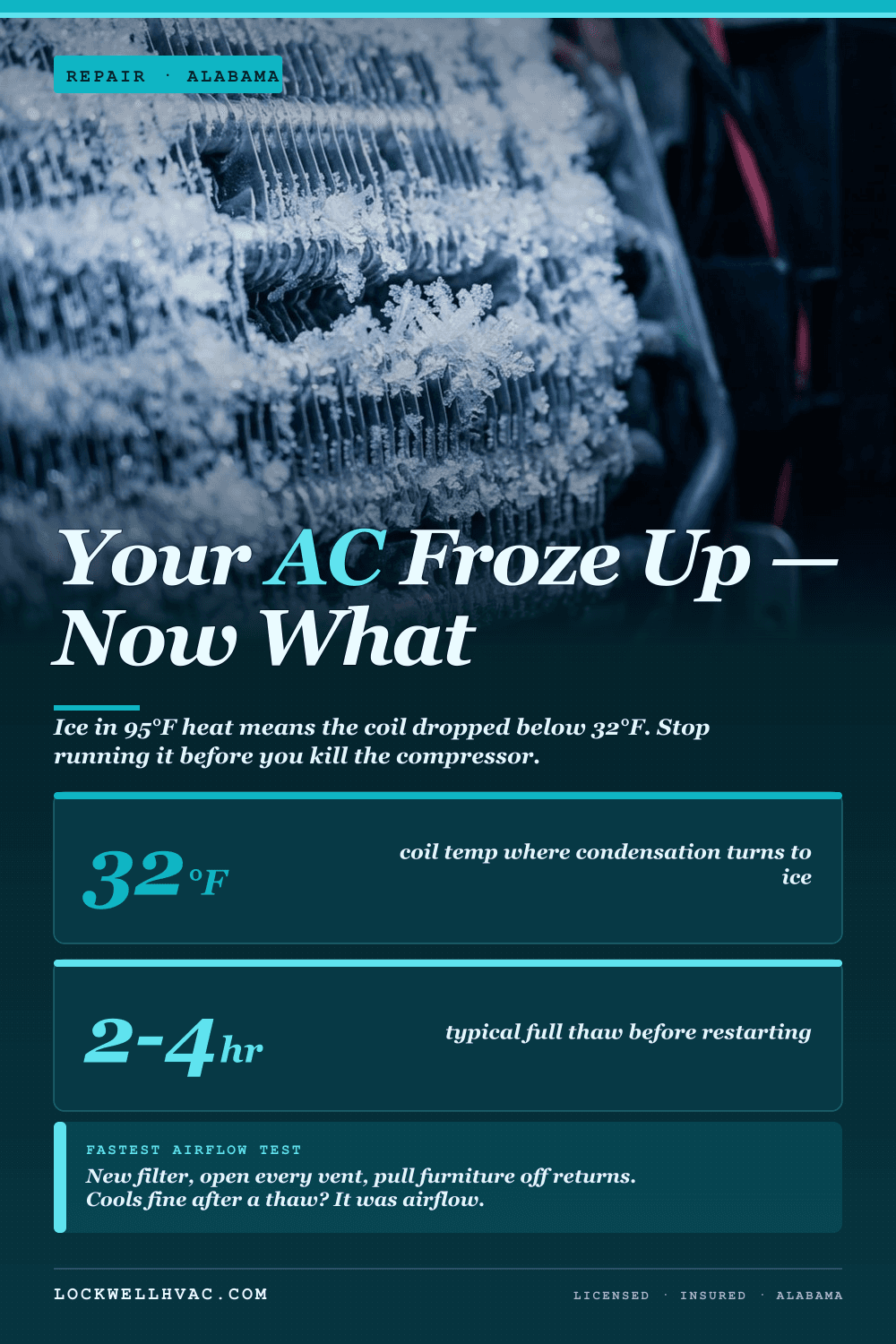
Turn the AC off immediately and switch the fan to ON. Most AC freeze-ups are caused by airflow restriction (dirty filter, closed vents, blocked return) or low refrigerant. Let the unit thaw fully — usually 2 to 4 hours — before running again. If it refreezes, stop and call a licensed HVAC tech. Running a frozen system damages the compressor, which is the most expensive part to replace.
Why Your AC Is a Block of Ice in 95°F Weather
It looks impossible. Your AC is freezing up — actual ice on the indoor coil and the suction line — while it's 95°F outside in Birmingham. Then the system stops cooling, water drips from the ceiling, and your power bill is climbing every day this happens.
Your AC freezes up for one reason at the chemistry level: the evaporator coil temperature dropped below 32°F, and humidity in the air condensed and froze on the metal. Once a thin ice layer forms, it insulates the coil from the airflow that would normally warm it back up. The ice grows. Eventually it bridges across the coil and the system can't move heat at all.
The question isn't whether the coil got cold enough to freeze — that's just the symptom. The question is what made it freeze. Almost always, it's one of four causes.
Most common causes of AC freeze-ups: airflow restriction, low refrigerant, dirty coil, and stuck blower or fan motor
Stop Right Now: Don't Run a Frozen System
Before reading further, do this. Walk to your thermostat and switch the system OFF (not just to a higher temperature — full OFF). Then switch the FAN to ON.
Why this matters: a frozen evaporator coil with the compressor running keeps trying to pump refrigerant into a fully restricted coil. Liquid refrigerant slugs back to the compressor. Compressor floodback destroys the most expensive part of your AC system. According to manufacturer service data, compressor failures from running a frozen system are one of the most common preventable repair claims in residential HVAC.
Switching the fan to ON lets the blower keep moving warm indoor air across the iced coil to thaw it faster. A full thaw takes 2 to 4 hours for typical residential coils, sometimes longer if the freeze went deep into the cabinet.
Cause #1: Airflow Restriction (Most Common)
The number one cause we see across Birmingham, Hoover, and Trussville is restricted airflow. Without enough warm indoor air moving across the evaporator coil, the refrigerant gets too cold, condensation freezes instead of draining, and ice forms.
Airflow restriction sources, in order of frequency:
A clogged filter blocks return airflow. In Birmingham's pollen-heavy climate, 1-inch filters can clog in 30 days during cooling season. We pull filters from frozen-system calls that look like gray cardboard.
Closed or blocked supply vents reduce return path. Homeowners closing bedroom vents to "save energy" actually starves the system. Opening vents you didn't think you used often fixes a freezing problem on the spot.
Furniture or rugs blocking returns. A couch pushed against a return grille can cut the system's air capacity by 40% or more.
Collapsed or kinked flex duct. Some installations have flex duct that sagged or pinched in attic spaces over the years. This is a tech-side fix.
Dirty evaporator coil. After 5+ years without cleaning, coils accumulate biofilm, dust, and pollen residue that block both airflow and heat transfer. ASHRAE recommends annual coil inspection and cleaning as needed.
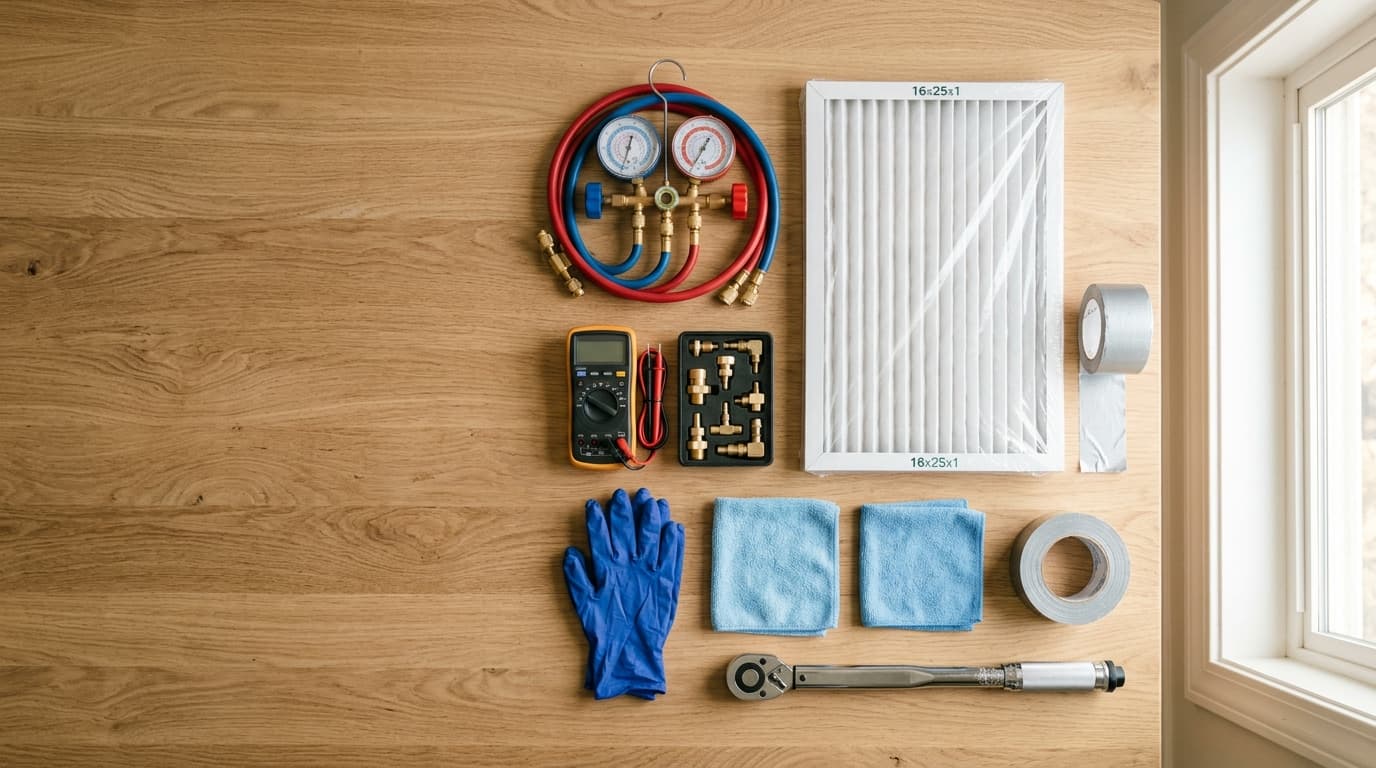
The fastest test: replace your filter, open every supply vent in the house, and pull furniture 6+ inches off any return grille. Wait the full thaw period (2 to 4 hours), then turn the system back on. If it cools normally and doesn't refreeze within a day, your problem was airflow.
Cause #2: Low Refrigerant Charge
Low refrigerant — almost always from a leak somewhere in the line set, coil, or service valves — drops evaporator pressure. Lower pressure means lower boiling temperature for the refrigerant, which means a colder coil surface. Cold enough, and humidity freezes on contact.
Leak symptoms beyond the freeze: hissing or bubbling sound at the indoor coil, oil residue around line set joints (refrigerant carries lubricant), and seasonal patterns where the system worked fine last summer and freezes this summer.
Refrigerant doesn't get "used up" like fuel — if you're low, you're leaking. Topping off without finding the leak is a band-aid that costs you the price of a recharge every season. The EPA Section 608 regulations actually require licensed technicians to find and document leaks above certain thresholds.
If your system uses R-22 (phased out by the EPA for new equipment), refilling has become very expensive. For older systems with significant R-22 leaks, replacement often makes more sense than continued top-offs.
Cause #3: Dirty Evaporator Coil
A coil coated in years of accumulated grime stops transferring heat properly. The refrigerant inside stays colder than design specs because it can't pick up enough heat from the indoor air. That cold refrigerant freezes incoming humidity on the coil's outer surface.
This is sneakier than the other causes because the system might cool fine for years with a slowly worsening coil, then suddenly tip over a threshold during peak Birmingham summer load and start freezing constantly.
Coil cleaning isn't a homeowner DIY job — it requires accessing the indoor coil cabinet, applying coil cleaner safely, and rinsing without water entering electrical components. NADCA cleaning standards cover the right way to do it.
Cause #4: Blower or Fan Motor Problems
A weakening blower motor moves less air, even with everything else clean and clear. Same outcome: not enough warm indoor air across the coil, freeze-up follows.
Symptoms of a struggling blower include reduced air volume from supply vents (hold your hand near a vent — does it feel like normal force?), unusual humming or rattling from the air handler, and the blower not starting until the system has run several seconds.
Capacitors weaken first. They're a $30 part with a 30-minute professional replacement. A bad capacitor often causes the blower to start slow or not at all, which mimics a major motor failure but is one of the cheapest HVAC repairs that exists.
When to Call a Technician
Call a licensed HVAC tech if:
- The system refreezes after a full thaw and filter change. - You can hear hissing, gurgling, or bubbling at the indoor unit. - You see oil residue around copper line set joints. - Your system uses R-22 refrigerant (system was installed before 2010). - The blower won't start or starts slow even after the freeze thaws. - You're seeing water damage from the freeze melt (ceiling stains, drywall damage).
Alabama HVAC contractors are licensed by the Alabama Board of Heating, Air Conditioning, and Refrigeration Contractors (HACR). Verify any tech's license before signing for refrigerant work — recovery, leak detection, and recharge all require EPA Section 608 certification.
Prevention: Keep It From Happening Again
Monthly filter changes from April through October. Annual professional tune-up before cooling season starts. Keep all supply vents open in every room (closing rooms doesn't save what people think it saves). Pull furniture and rugs off return grilles. Schedule a coil cleaning every 2 to 3 years.
For repair help on a frozen unit, see our AC repair page. For ongoing prevention, maintenance plans catch the conditions that cause freeze-ups before they shut you down. Our emergency HVAC service is available 24/7 across the Birmingham metro when an active freeze-up takes your house out in 95°F heat.
Need HVAC service in the Birmingham area?
Available 24/7. Licensed and insured. Written estimates before work begins.
Call (205) 206-7030Frequently Asked Questions
Visual Guide
Compiled by the HVAC technicians at Lockwell HVAC in Gardendale, Alabama. Our repair advice comes from diagnosing failures on real systems across the North Birmingham metro — capacitors, contactors, ignition faults, and low charge — and explaining what is actually wrong before parts get replaced.
- U.S. Department of Energy — Energy efficiency and maintenance guidelines
- ENERGY STAR — Thermostat and installation efficiency standards
- ASHRAE — Coil cleaning and maintenance guidelines
- ACCA — Manual J load calculation standards and equipment lifespan data
- U.S. EPA — Refrigerant regulations and indoor air quality guidance
- NFPA — Electrical safety and fire prevention
- CPSC — Carbon monoxide safety data
- NADCA — Duct cleaning standards
Bookmark this page for reference. Share it with a neighbor who might find it useful. If you have questions about anything covered here, call us directly — a real person answers, not a recording.
Read Next