How to Spot a Bad HVAC Installation in Birmingham
Check for unsealed ductwork, uninsulated refrigerant lines, tilted outdoor units, and missing load calculations. A bad installation costs you money every month it runs and shortens equipment life by years.
A Bad Installation Bleeds Money Every Month
A bad HVAC installation costs you money every single month it runs. Undersized equipment, improper ductwork, and sloppy refrigerant charges cause higher bills, uneven temperatures, and early system failure.
We see this across the Birmingham metro — Irondale, Bessemer, Center Point, Pleasant Grove. A homeowner gets a "great deal" on a new system. Six months later, electric bills are higher than before and certain rooms never reach the right temperature. The equipment is fine. The installation is the problem.
According to ENERGY STAR, improper installation can reduce system efficiency by up to 30 percent. That is almost a third of your investment working against you from day one.
Efficiency reduction possible from improper HVAC installation, according to ENERGY STAR research
Check the Ductwork First
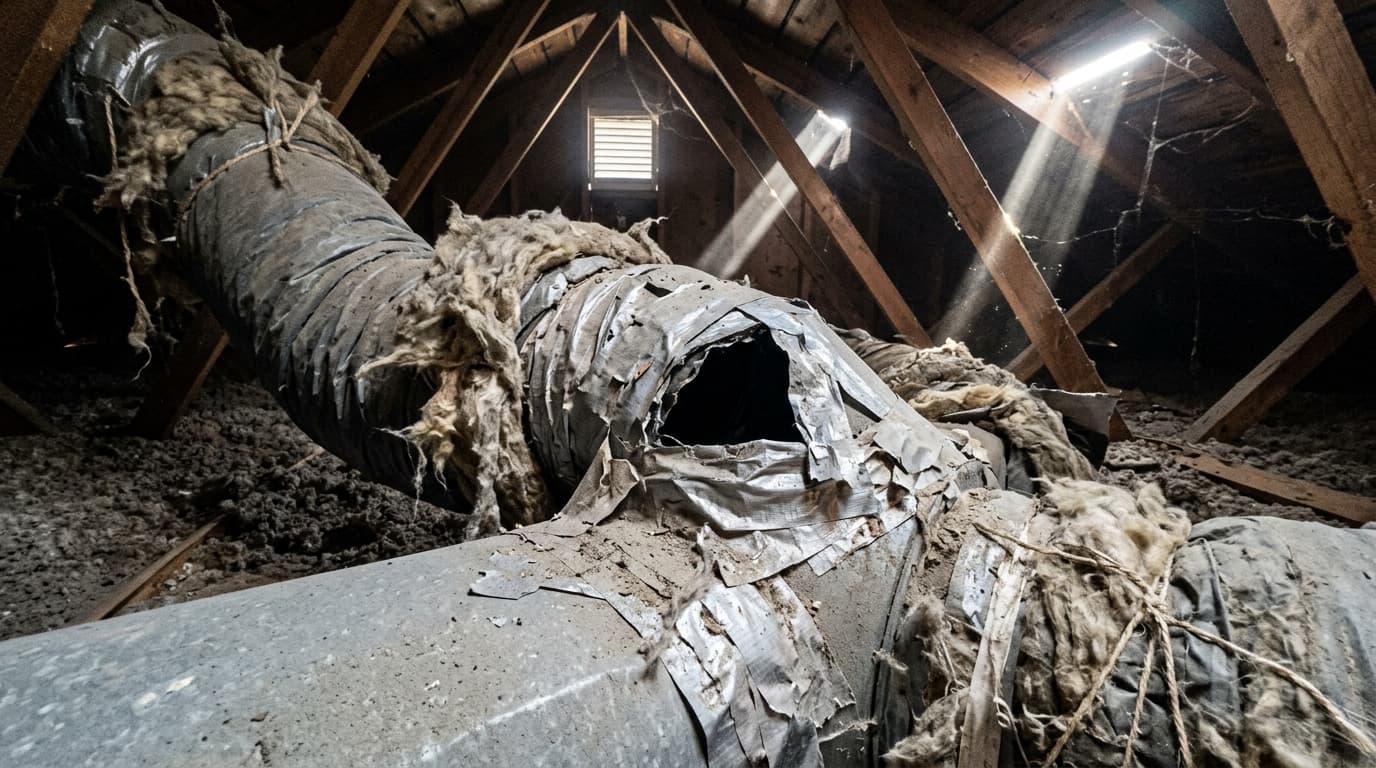
Ducts should be sealed at every joint with mastic or metal-backed tape — never regular duct tape. Despite the name, standard duct tape fails within months in attic heat.
Leaky ducts waste 20 to 30 percent of your conditioned air into the attic or crawlspace. The U.S. Department of Energy identifies duct leakage as one of the largest energy wastes in residential HVAC systems.
Walk your accessible ductwork in the attic or crawlspace. Look for gaps at connections, sagging runs without proper support, and insulation that has pulled away from joints. If you can feel air blowing from duct connections, you have a sealing problem.
Grab a stick of incense and hold it near duct joints while the system runs. If the smoke gets pulled toward or blown away from a joint, that connection is leaking conditioned air and needs sealing with mastic.
Inspect the Refrigerant Lines
Look at the refrigerant lines running from your outdoor unit to your indoor coil. Both the large suction line and smaller liquid line should be properly insulated with closed-cell foam insulation. No exposed copper anywhere.
Uninsulated suction lines lose efficiency and cause condensation that can damage surrounding materials. In humid Alabama conditions — especially through Gardendale, Fultondale, and Adamsville — uninsulated lines drip constantly during summer operation, creating moisture problems in walls and ceilings.
Also check that the lines are properly supported with hangers and not kinked or bent at sharp angles. Kinks restrict refrigerant flow and reduce system capacity.
Verify the Load Calculation Was Done
A properly sized system matches your home through a Manual J load calculation. This is not optional — it is the ACCA (Air Conditioning Contractors of America) standard and the foundation of proper HVAC design.
An oversized unit short-cycles — turning on and off too frequently — which wastes energy and leaves your home humid. An undersized unit runs constantly and never reaches your thermostat setpoint.
Ask your installer for the load calculation paperwork. If they cannot produce it, the system was sized by guesswork. That is not how licensed professionals work in Alabama.
Conditioned air wasted through leaky ductwork, per the U.S. Department of Energy
Examine the Outdoor Unit Placement
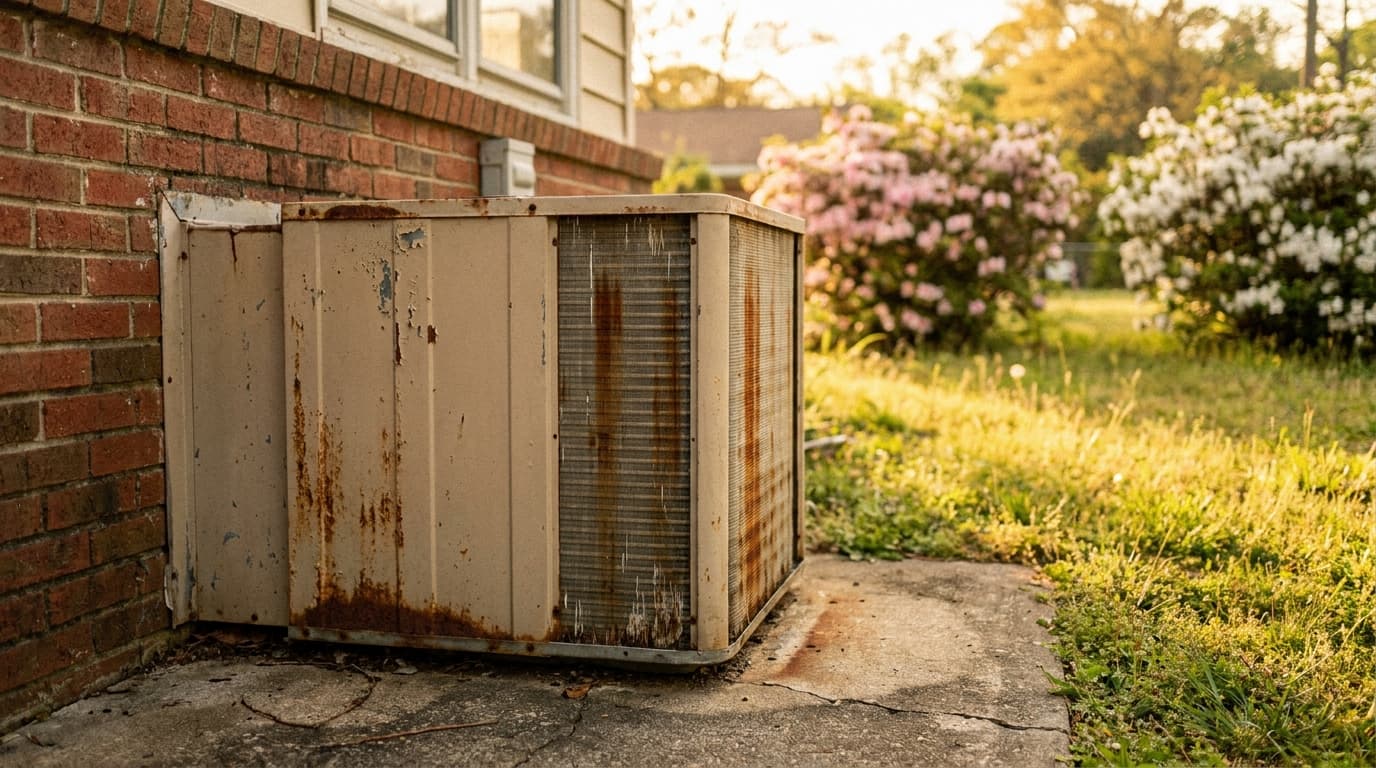
The outdoor unit should sit on a level pad with proper clearance on all sides — manufacturer specs typically require 18 to 24 inches minimum. If the unit is tilted, sitting in a low spot that collects water, or crammed against a wall, the installer cut corners.
Proper placement matters for drainage, airflow, and long-term reliability. A tilted unit causes oil to pool on one side of the compressor, which accelerates wear.
In neighborhoods across Hueytown, Helena, and Pleasant Grove, we regularly see outdoor units placed directly on bare dirt without a proper pad, or positioned where gutter runoff creates standing water. Both shorten equipment life.
Get a Second Opinion if Something Looks Wrong
If something looks wrong with your installation, get a second opinion from a different licensed HVAC contractor. Alabama requires HVAC contractors to hold proper licensing through the Alabama Board of Heating, Air Conditioning, and Refrigeration Contractors (HACR).
A qualified technician can evaluate the installation and identify problems before they cause expensive damage. An independent assessment typically takes about an hour and covers ductwork, refrigerant charge, electrical connections, airflow measurements, and equipment sizing.
The sooner you catch installation problems, the less damage they cause. Systems running with improper refrigerant charge, for example, can destroy a compressor within a few years — and compressor replacement is one of the most expensive HVAC repairs. If you are weighing whether a system limps to the finish line or needs replacing now, our guide on how long HVAC systems last in Alabama lays out the realistic numbers.
Need HVAC service in the Birmingham area?
Available 24/7. Licensed and insured. Written estimates before work begins.
Call (205) 206-7030Frequently Asked Questions
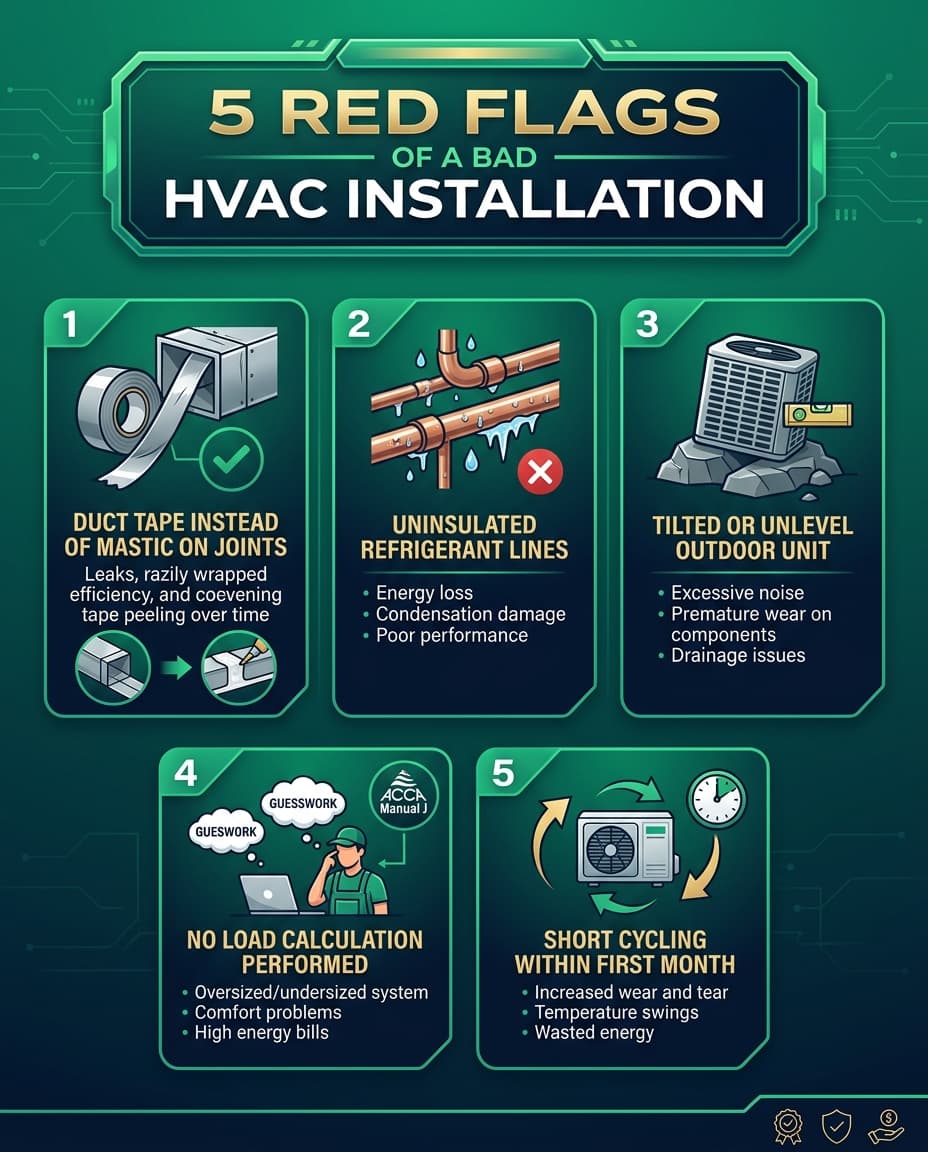
Visual Guide
Compiled by the HVAC technicians at Lockwell HVAC in Gardendale, Alabama. The comparisons and explanations here are grounded in what we install and service every week across the North Birmingham metro, so the trade-offs reflect how systems hold up in Alabama homes rather than spec-sheet claims.
- U.S. Department of Energy — Energy efficiency and maintenance guidelines
- ENERGY STAR — Thermostat and installation efficiency standards
- ASHRAE — Coil cleaning and maintenance guidelines
- ACCA — Manual J load calculation standards and equipment lifespan data
- U.S. EPA — Refrigerant regulations and indoor air quality guidance
- NFPA — Electrical safety and fire prevention
- CPSC — Carbon monoxide safety data
- NADCA — Duct cleaning standards
Bookmark this page for reference. Share it with a neighbor who might find it useful. If you have questions about anything covered here, call us directly — a real person answers, not a recording.
Read Next