Emergency Heating Repair Guide for Fultondale, AL
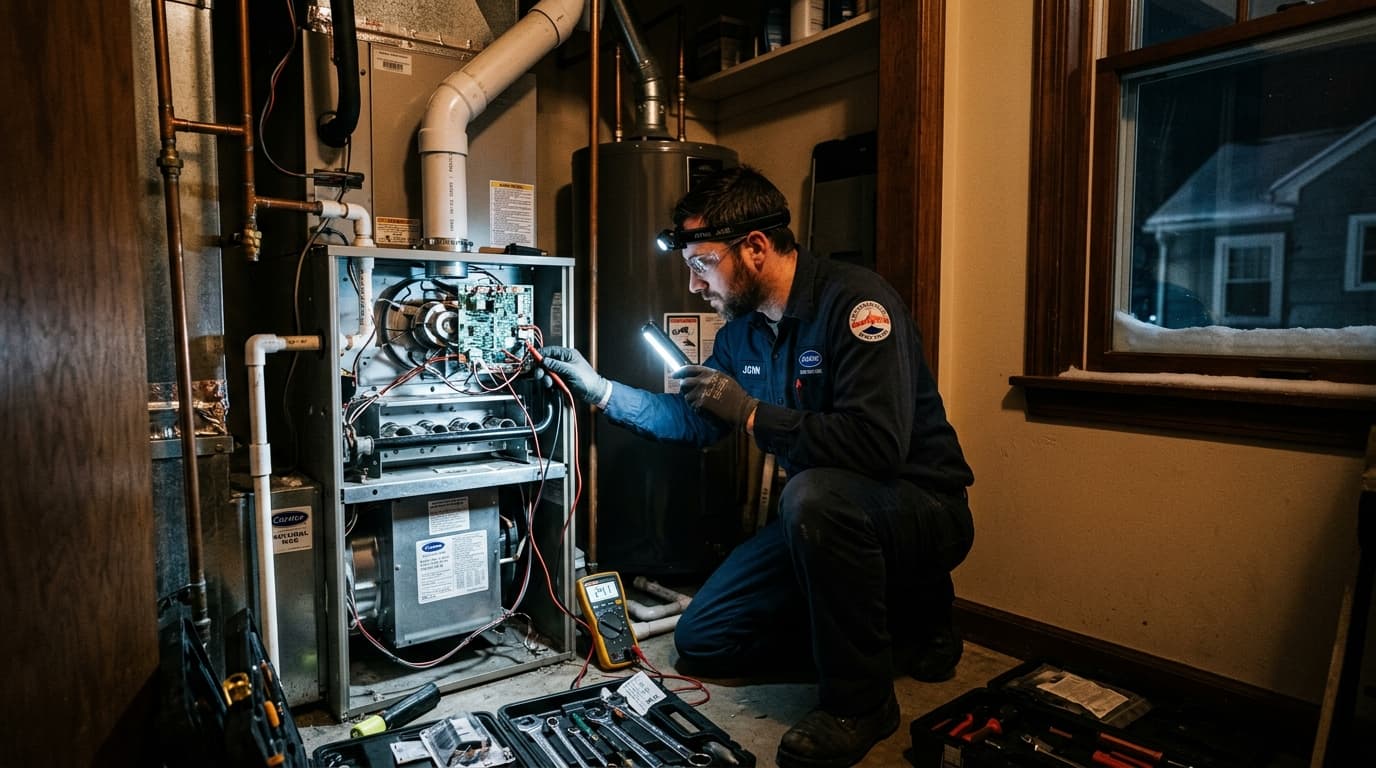
Check thermostat batteries, verify heat mode, and inspect the breaker first — these fix about 20% of heating failures. For gas furnaces, never ignore a gas smell. Leave immediately and call your gas utility from outside.
First Steps When Your Heat Fails in Fultondale
Emergency heating repair in Fultondale starts with the same three checks every time — and they fix the problem about 20 percent of the time before a technician ever shows up. When your heat goes out on a cold Alabama night, stay calm and work through the basics before you call anyone.
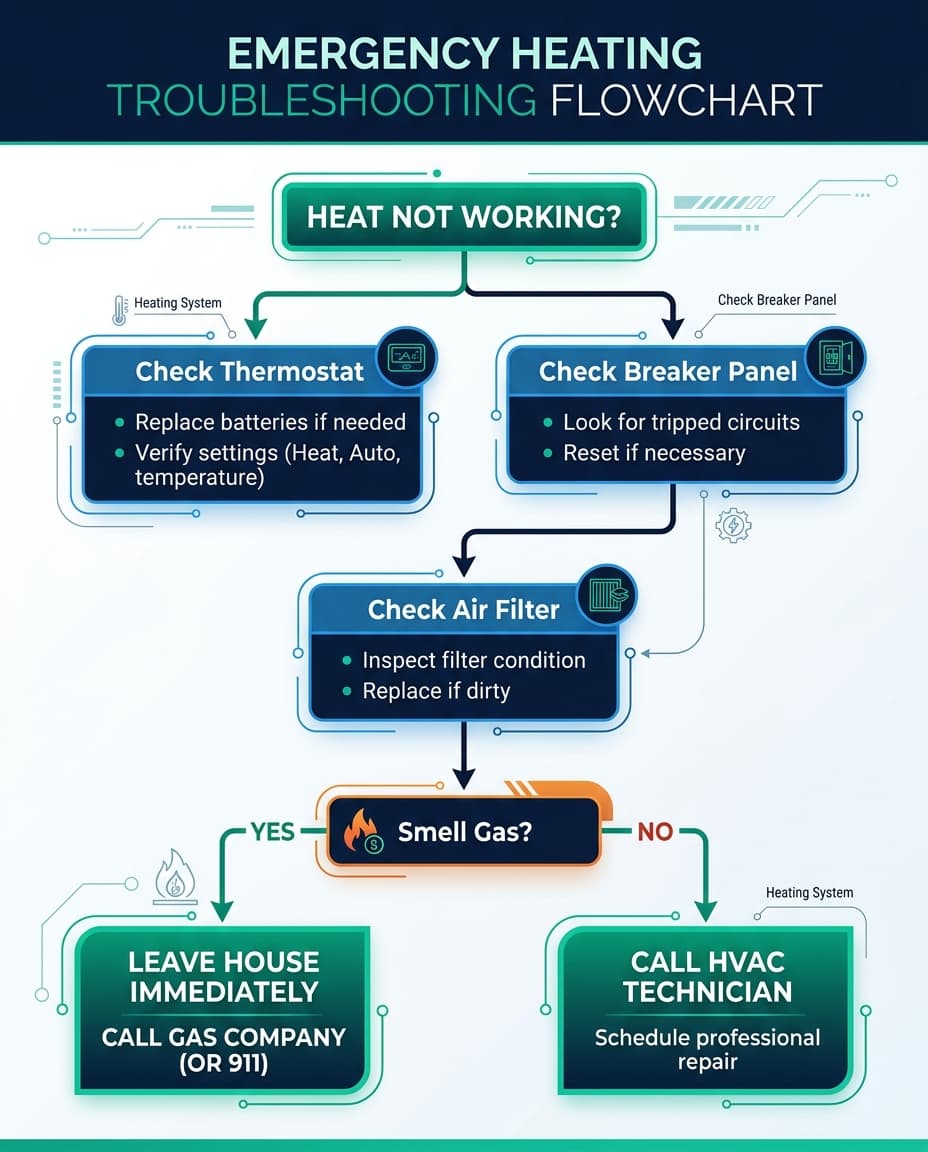
Check your thermostat batteries, make sure the system is set to heat mode (not cool or off), and verify the breaker has not tripped at your electrical panel. These three steps fix the problem about 20 percent of the time — and they cost you nothing.
Homeowners across Fultondale, Gardendale, and Adamsville deal with this every winter. The weather drops fast in north Birmingham, and a heating failure at 2 AM feels like an emergency. But running through these basics first can save you time and money.
Percentage of heating failures that homeowners can resolve themselves by checking the thermostat, mode setting, and breaker
Check Your Air Filter Before Calling Anyone
If the thermostat is working but nothing happens, check your air filter next. A completely clogged filter can cause the system to overheat and shut down on a high-limit safety switch.
This is the most common "emergency" we see that is not actually an emergency. The system is protecting itself by shutting down before internal temperatures cause damage.
Replace the filter and wait 30 minutes for the system to cool down and reset. If the system fires back up and runs normally, the filter was your problem. Set a reminder to check it monthly going forward.
Keep two spare filters in your hall closet at all times. When your system shuts down at midnight, the last thing you want is to drive across Fultondale looking for an open store that sells HVAC filters.
Gas Furnace Safety — Know the Danger Signs
For gas furnaces, check whether the pilot light or igniter is working. Modern furnaces use hot surface igniters that glow orange — you can usually see this through the small inspection window on the furnace cabinet.
If you smell gas, leave the house immediately. Do not flip any switches, do not use your phone inside the house, and do not try to locate the leak. Get everyone out and call your gas company from outside. Spire (formerly Alabama Gas Corporation) has a 24-hour emergency line.
Carbon monoxide is the invisible danger with gas furnaces. If your CO detector alarms, treat it as a real emergency. Open windows, get everyone outside, and call 911. The CPSC (Consumer Product Safety Commission) reports that CO from fuel-burning appliances causes over 150 deaths annually in the United States.
Heat Pump Troubleshooting for Cold Snaps
Electric heat pumps — common across Fultondale, Center Point, and Irondale — can struggle when temperatures drop below 30 degrees. If your heat pump is blowing lukewarm air during a cold snap, the auxiliary heat strips should kick in automatically.
If auxiliary heat does not engage, check your thermostat. Some thermostats have an "emergency heat" mode that bypasses the heat pump and runs auxiliary strips directly. This is a temporary measure — it costs more to run — but it keeps your family warm until a technician can diagnose the issue.
Heat pumps also run defrost cycles in cold weather. The outdoor unit may steam, make whooshing sounds, and temporarily blow cool air from the indoor vents. This is normal. A defrost cycle typically lasts 5 to 15 minutes and happens automatically. If you are weighing whether to replace an aging gas furnace with a heat pump, our breakdown of heat pump vs furnace in Alabama walks through the real-world tradeoffs.
Deaths annually in the U.S. from carbon monoxide produced by fuel-burning appliances, per the CPSC
When You Actually Need Emergency HVAC Repair
True heating emergencies include no heat when temperatures are below freezing, gas odors anywhere near your furnace or gas lines, unusual burning smells from vents (not the normal dusty smell at first seasonal startup), and carbon monoxide detector alarms.
These situations need immediate professional attention. Do not attempt DIY repairs on gas components or electrical systems beyond the basic checks described above.
If your emergency falls outside Fultondale — or you need coverage nights and weekends when standard shops are closed — an emergency HVAC service that dispatches 24/7 across the full Birmingham metro including the south and east suburbs may be your best option.
Homes with elderly residents, infants, or people with medical conditions should have a lower threshold for calling. Hypothermia risk increases significantly for vulnerable populations when indoor temperatures drop below 60 degrees, according to the CDC.
Protect Your Fultondale Home From Future Emergencies
Prevention beats emergency response every time. Schedule a heating system tune-up every fall before cold weather arrives. An EPA Section 608 certified technician tests ignition systems, checks gas valve operation, inspects heat exchangers for cracks, and verifies safety controls.
Homes across Fultondale, Pleasant Grove, and Bessemer that receive annual fall maintenance experience far fewer mid-winter heating failures. Most problems that cause emergency breakdowns show warning signs weeks or months earlier — signs that a trained technician catches during routine maintenance.
Lockwell HVAC serves Fultondale and all of north Birmingham. Call (205) 206-7030 for heating system service.
Need HVAC service in the Birmingham area?
Available 24/7. Licensed and insured. Written estimates before work begins.
Call (205) 206-7030Frequently Asked Questions
Visual Guide
Compiled by the HVAC technicians at Lockwell HVAC in Gardendale, Alabama. This guidance is shaped by after-hours and no-heat, no-cool calls across the North Birmingham metro — what to check first, what is safe to do yourself, and when an Alabama home truly needs a technician out the same day.
- U.S. Department of Energy — Energy efficiency and maintenance guidelines
- ENERGY STAR — Thermostat and installation efficiency standards
- ASHRAE — Coil cleaning and maintenance guidelines
- ACCA — Manual J load calculation standards and equipment lifespan data
- U.S. EPA — Refrigerant regulations and indoor air quality guidance
- NFPA — Electrical safety and fire prevention
- CPSC — Carbon monoxide safety data
- NADCA — Duct cleaning standards
Bookmark this page for reference. Share it with a neighbor who might find it useful. If you have questions about anything covered here, call us directly — a real person answers, not a recording.
Read Next